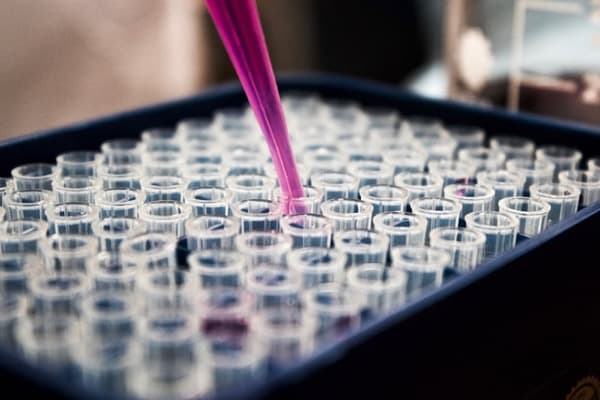
Peptides for Muscle Growth & Performance
Growth hormone secretagogues, tissue-injury research peptides, and myostatin biology — a literature overview of performance-related peptide research.
Growth hormone secretagogues and tissue-injury research peptides are among the most studied compound classes in musculoskeletal research. Most of the evidence comes from animal models and small human physiology studies.
This article reviews the current state of research across key peptide categories relevant to muscle biology and physical performance. It is a literature overview and does not describe human use.
Growth Hormone: The Master Regulator
Growth hormone (GH) is the body's primary anabolic hormone, driving muscle protein synthesis, fat metabolism, and tissue repair. GH production peaks in adolescence and declines steadily thereafter — by age 60, most adults produce less than half the GH they did at 25.
This decline — termed somatopause — correlates with:
- Loss of lean muscle mass (sarcopenia)
- Increased body fat, particularly visceral fat
- Reduced bone density
- Slower recovery from exercise and injury
- Decreased exercise capacity
Rather than replacing GH directly, researchers have focused on peptides that stimulate the body's own GH production — an approach that preserves the natural pulsatile release pattern.
Growth Hormone Secretagogues (GHS)
Ipamorelin
Ipamorelin is a pentapeptide that selectively stimulates growth hormone release through the ghrelin receptor (GHS-R1a). It is considered one of the "cleanest" GH secretagogues because:
- Highly selective — stimulates GH release without significantly affecting cortisol, prolactin, or aldosterone
- Exposure-dependent response — published studies report GH release that increases with exposure
- Preserved pulsatility — mimics the body's natural GH release pattern
- Limited desensitization — some studies report a sustained GH response over longer study periods
Research findings indicate that Ipamorelin produces GH elevations comparable to other secretagogues but with fewer side effects, making it a preferred research tool for studying GH-mediated anabolism.
CJC-1295
CJC-1295 is a modified version of Growth Hormone Releasing Hormone (GHRH) with a albumin-binding modification (DAC) that extends its half-life from minutes to approximately 6-8 days.
Key Properties
- Extended duration — single administration produces elevated GH and IGF-1 levels for several days
- Amplified GH pulses — rather than creating artificial peaks, CJC-1295 amplifies the body's natural GH secretion pattern
- IGF-1 elevation — sustained increase in Insulin-like Growth Factor 1, a key mediator of GH's anabolic effects
- Distinct receptor — CJC-1295 acts on the GHRH receptor, while Ipamorelin acts on the ghrelin receptor. See the receptor pharmacology comparison
Tissue-Injury Research Peptides
BPC-157 (Body Protection Compound-157)
BPC-157 is a 15-amino-acid peptide originally isolated from human gastric juice. It has become one of the most studied compounds in tissue repair research.
Musculoskeletal Research
Animal studies of BPC-157 report endpoints in these models:
- 1Tendon models — increased collagen deposition and organized fiber alignment in transected Achilles tendon models
- 2Muscle models — functional and histological endpoints in crush-injury and transection models
- 3Ligament models — biomechanical and histological endpoints after medial collateral ligament transection
- 4Bone models — increased callus formation and earlier mineralization in fracture models
- 5Inflammatory markers — changes in inflammatory cytokine expression at injury sites
These are animal findings. No large controlled human trials have been published.
Mechanism
Proposed mechanisms include:
- Upregulation of growth factors (EGF, FGF, VEGF, NGF)
- Modulation of the nitric oxide system
- FAK-paxillin signaling pathway activation
- Increased angiogenesis markers at injury sites
TB-500 (Thymosin Beta-4)
TB-500 is a synthetic version of Thymosin Beta-4, a 43-amino-acid peptide found in virtually all human cells. It is involved in actin regulation and cell migration.
Research Applications
- Cardiac models — animal studies report effects on cardiac cell migration and survival after ischemic injury
- Muscle models — studies report effects on satellite cell (muscle stem cell) migration in injury models
- Inflammatory markers — studies report lower inflammatory markers in several tissue-injury models
- Hair follicle stem cells — animal studies report effects on hair follicle stem cell migration and differentiation
Myostatin Inhibition
Myostatin is a protein that negatively regulates muscle growth — it tells muscle to stop growing. Inhibiting myostatin has been a major focus of muscle biology research.
Follistatin-Related Peptides
Follistatin is a natural myostatin antagonist. Research into follistatin-derived peptides and myostatin-binding peptides examines:
- Myostatin signaling — how blocking the pathway affects muscle protein synthesis in models
- Body composition — lean-mass and fat-mass endpoints in animal models
- Sarcopenia models — age-related muscle loss in animal studies
Animal models with myostatin deletions show dramatically increased muscle mass (the "mighty mice" and "double-muscled" cattle phenotypes), demonstrating the pathway's potency.
Practical Research Considerations
Study Design
Published studies of performance-related peptides typically define:
- The model — species, age, and training status of the study population
- The comparator — a placebo or vehicle control group
- The study length — hormonal-axis endpoints need weeks to months of observation
Biomarker Monitoring
Key markers tracked in performance peptide research:
| Marker | What It Measures | Direction Reported in Studies |
|---|---|---|
| IGF-1 | Growth hormone axis activity | ↑ |
| GH (serum) | Direct GH levels | Pulsatile ↑ |
| CRP / IL-6 | Systemic inflammation | ↓ |
| Creatine Kinase | Muscle damage / recovery | ↓ |
| DEXA scan | Body composition | ↑ lean, ↓ fat |
| Grip strength | Functional strength | ↑ |
The Importance of Purity
In performance research, compound purity directly affects result quality:
- Impurities can trigger immune responses that confound inflammatory biomarker data
- Incorrect peptide sequences (from poor synthesis) will not bind target receptors correctly
- Degraded compounds produce unpredictable dose-response curves
This is why every compound from LifeSpanSupply is independently HPLC verified at ≥99% purity with mass spectrometry confirmation. Your research deserves materials you can trust.
Shop Performance Research Peptides
Key compounds discussed: Ipamorelin 5mg, CJC-1295 no-DAC 5mg, BPC-157 5mg, TB-500 10mg. Browse the full growth-hormone range or the recovery range.
All products mentioned are chemical reagents intended for laboratory analysis.