How to Reconstitute Semaglutide
Laboratory reconstitution of lyophilized semaglutide reference material — diluent choice, concentration math (mg ÷ mL = mg/mL), handling, and storage.
Semaglutide is a GLP-1 receptor agonist and one of the most studied peptides in metabolic research. The STEP, SUSTAIN, and SELECT clinical trial programs made it a common reference compound for obesity, type 2 diabetes, and cardiometabolic models.
This guide covers laboratory reconstitution of lyophilized semaglutide reference material: solvent choice, concentration math, handling, and storage. It does not describe administration.
What you will need
- Lyophilized semaglutide vial — the mass is printed on the vial label and the Certificate of Analysis.
- Bacteriostatic water — sterile water with 0.9% benzyl alcohol as a preservative, for solutions that you keep for more than a few days.
- A sterile syringe or calibrated pipette — to transfer the diluent.
- Sterile alcohol wipes — to clean the vial stoppers.
- A permanent marker — to label the vial.
Calculate the concentration
The concentration of the solution is the peptide mass divided by the diluent volume:
*mg of peptide ÷ mL of diluent = mg/mL*
| Vial size | Diluent volume | Concentration |
|---|---|---|
| 2 mg | 1 mL | 2 mg/mL |
| 2 mg | 2 mL | 1 mg/mL |
| 5 mg | 2 mL | 2.5 mg/mL |
| 5 mg | 2.5 mL | 2 mg/mL |
| 10 mg | 4 mL | 2.5 mg/mL |
| 10 mg | 5 mL | 2 mg/mL |
Choose the concentration that your assay or experimental design needs, and measure the diluent volume exactly. A 2 mL versus 2.5 mL difference changes the concentration by 25%.
Step-by-step reconstitution
Step 1: Bring materials to room temperature
Remove the vial and the diluent from the refrigerator 15–20 minutes before you start.
Step 2: Clean the stoppers
Wipe both stoppers with a fresh alcohol wipe and let them dry.
Step 3: Measure the diluent
Draw the exact volume of diluent for your target concentration.
Step 4: Add the diluent slowly
Insert the needle or pipette at a slight angle. Let the diluent run slowly down the inside wall of the vial. Do not spray it directly onto the lyophilized cake. A direct jet can cause foaming.
Step 5: Dissolve without shaking
Do not shake the vial. Swirl it gently for 10–20 seconds, then let it stand for 1–2 minutes. If some powder remains, put the vial in the refrigerator for 15–30 minutes and swirl again.
The solution must be clear and colorless. Cloudiness, a yellow tint, or visible particles can indicate degradation or contamination. Do not use the solution in that case, and contact the supplier.
Step 6: Label and store
Record the lot number, mixing date and concentration. Follow the product-specific expiry on the label.
Use the storage instructions for the format supplied. Check the product listing and label; not every compound is available in every format.
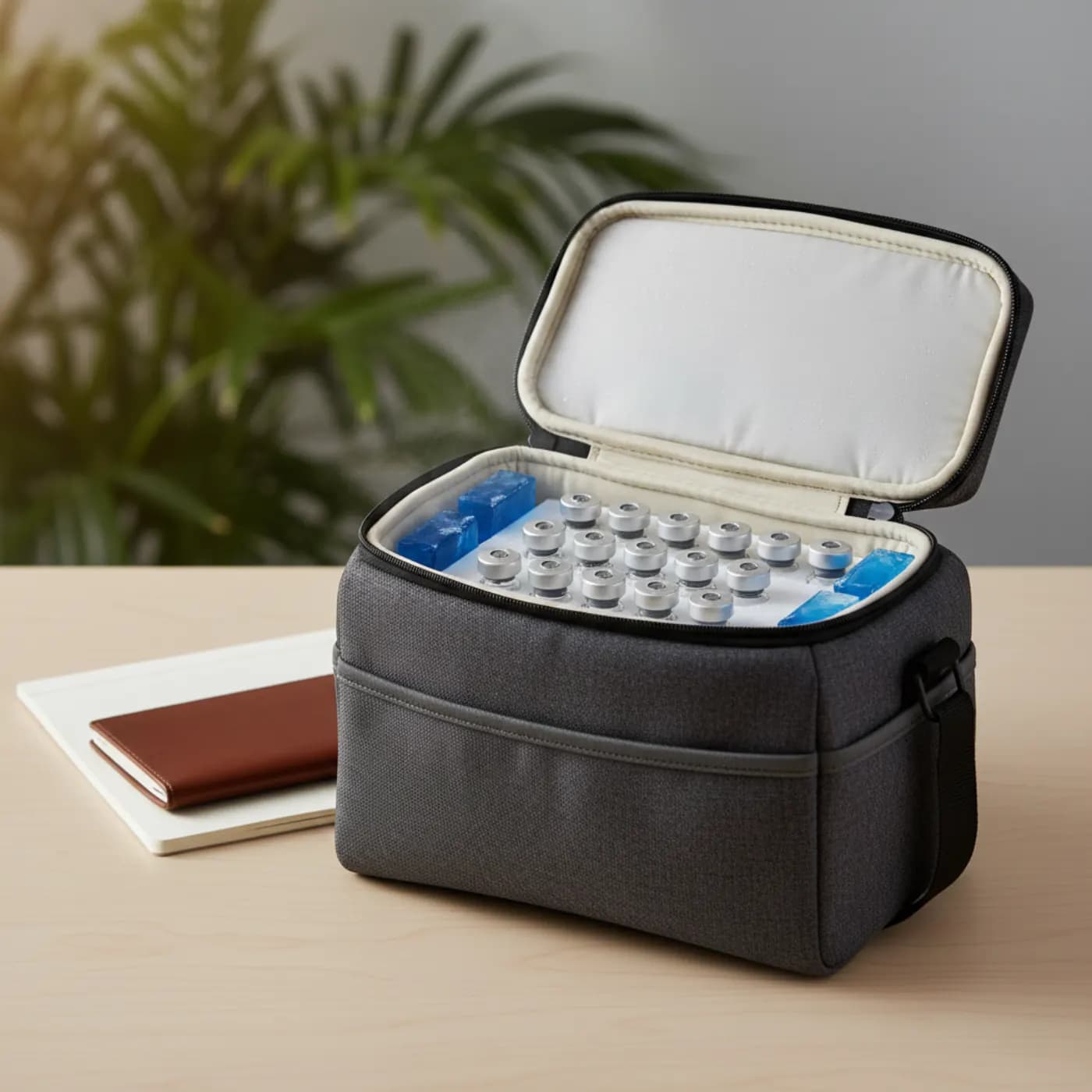
- Peptide vial — Store the lyophilized powder at −20°C. Keep dry and protected from light. After reconstitution, follow the product label’s storage and expiry instructions.
- Dual-chamber cartridges — Keep refrigerated at 2–8°C, including before activation. The peptide powder and included BAC water remain separate until activation. Follow the cartridge label’s storage and expiry instructions.
- Multi-dose pen — Keep refrigerated at 2–8°C continuously. The approximate stability window is 30–45 days from the date mixed, depending on the peptide. Follow the product-specific expiry on the label.
- BAC water — Keep bacteriostatic water refrigerated at 2–8°C. Follow the storage, expiry and discard instructions on the product label.
- Nasal spray — Store the nasal spray at room temperature. Follow the storage and expiry instructions on the product label.
Common handling errors
- 1Wrong diluent — sterile water without preservative shortens the usable storage time.
- 2Shaking or vortexing — mechanical stress can damage the peptide.
- 3Spraying onto the powder — causes foaming.
- 4Using the wrong storage conditions — Dry powder vials: −20°C. Dual-chamber cartridges, ready-mixed multi-dose pens and BAC water: 2–8°C. Nasal sprays: room temperature. Follow the storage and expiry instructions on the product label.
- 5No label — without the date and concentration, you cannot track the storage time.
Other GLP-1 class peptides
The same reconstitution technique applies to Tirzepatide and Retatrutide. For the receptor and potency differences, see Semaglutide vs Tirzepatide. For the full class background, see the GLP-1 agonist research guide.
GLP-1 class research reagents
LifeSpanSupply does not currently stock semaglutide. The GLP-1 class range includes related incretin-pathway research reagents, each with an HPLC Certificate of Analysis. Bacteriostatic water 3 ml is also available.
All products mentioned are chemical reagents for laboratory research only. Not for human or veterinary use.