Glossary · Mitochondria-targeted tetrapeptide
SS-31
Also known as: Elamipretide · Bendavia · MTP-131 · إس إس-31
- Class
- Mitochondria-targeted tetrapeptide
- Half-life
- ~3–5 hours; accumulates in mitochondria
Mechanism
SS-31 (elamipretide; also published as Bendavia and MTP-131) is a cell-permeable aromatic-cationic tetrapeptide that accumulates in the inner mitochondrial membrane. There it binds cardiolipin, the phospholipid that supports the electron-transport-chain complexes and cristae structure. In preclinical studies this interaction stabilised cristae architecture, reduced cardiolipin peroxidation and reactive-oxygen-species production, and improved coupling of electron transport to ATP synthesis.
Research areas
- Mitochondrial bioenergetics and cardiolipin biology.
- Animal models of age-related decline in skeletal-muscle and cardiac mitochondrial function.
- Ischaemia–reperfusion injury models.
- Clinical investigation in primary mitochondrial myopathy and Barth syndrome.
Regulatory status
Elamipretide has been evaluated in clinical trials; the MMPOWER-3 trial in primary mitochondrial myopathy did not meet its primary endpoint. Regulatory status differs by jurisdiction and indication. The material supplied here is a research reagent.
Storage and stability
Use the storage instructions for the format supplied. Check the product listing and label; not every compound is available in every format.
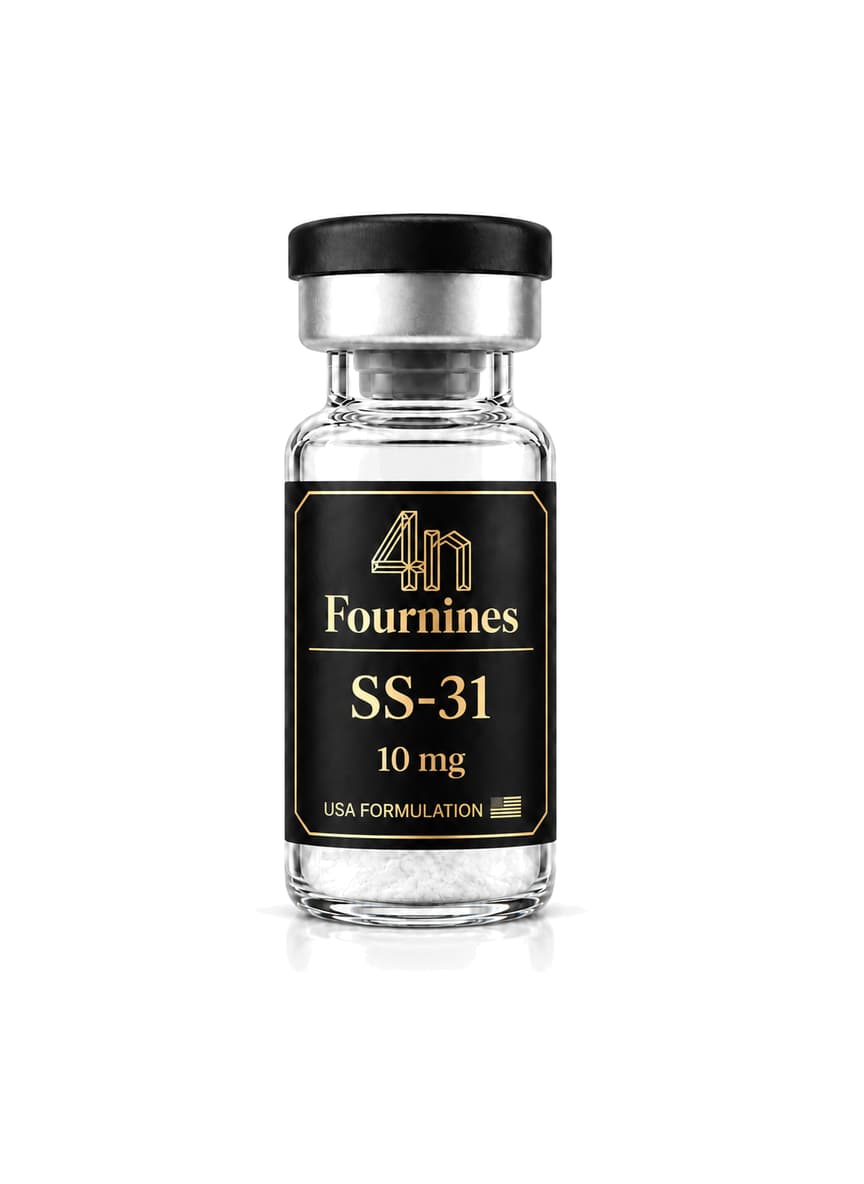
- Peptide vial — Store the lyophilized powder at −20°C. Keep dry and protected from light. After reconstitution, follow the product label’s storage and expiry instructions.
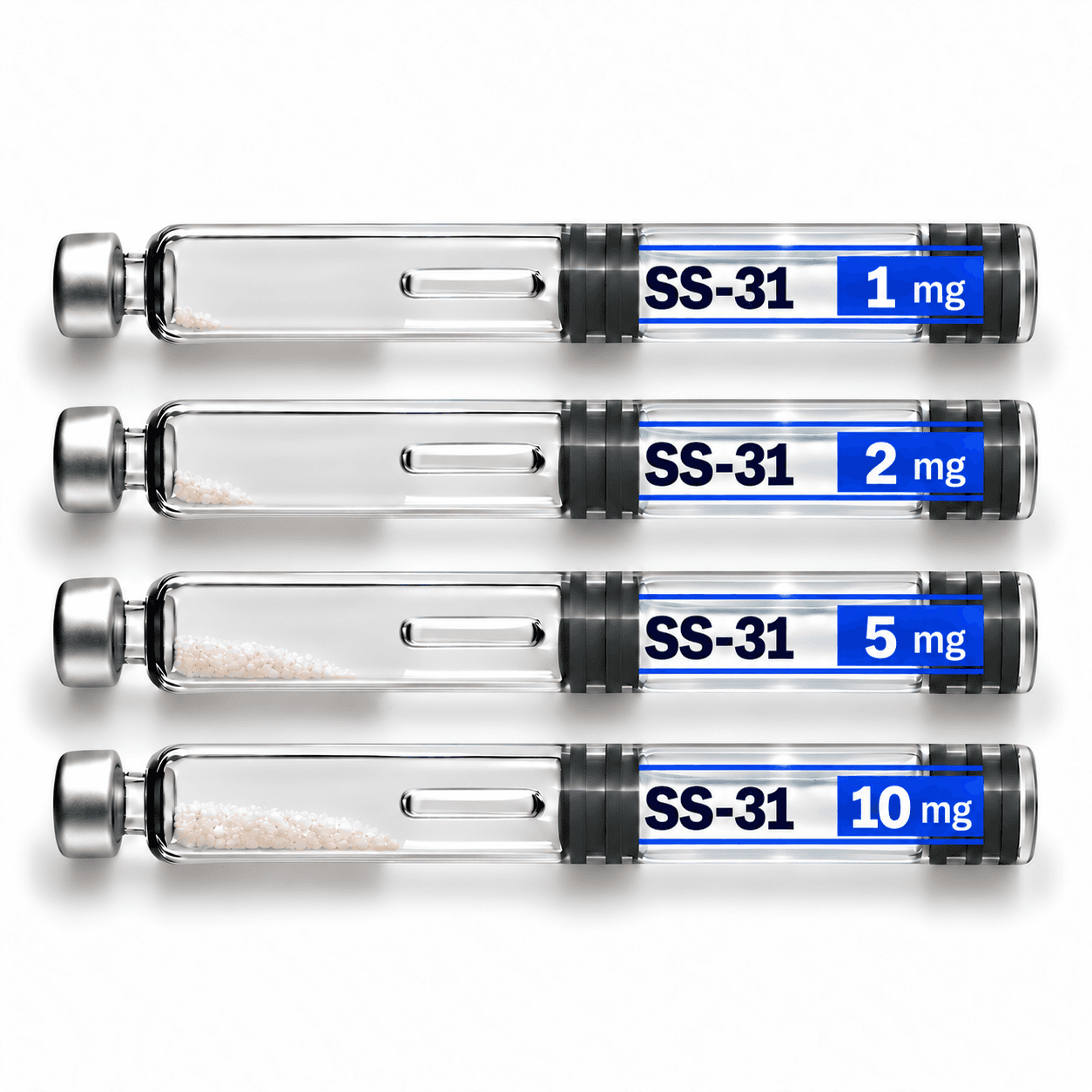
- Dual-chamber cartridges — Keep refrigerated at 2–8°C, including before activation. The peptide powder and included BAC water remain separate until activation. Follow the cartridge label’s storage and expiry instructions.
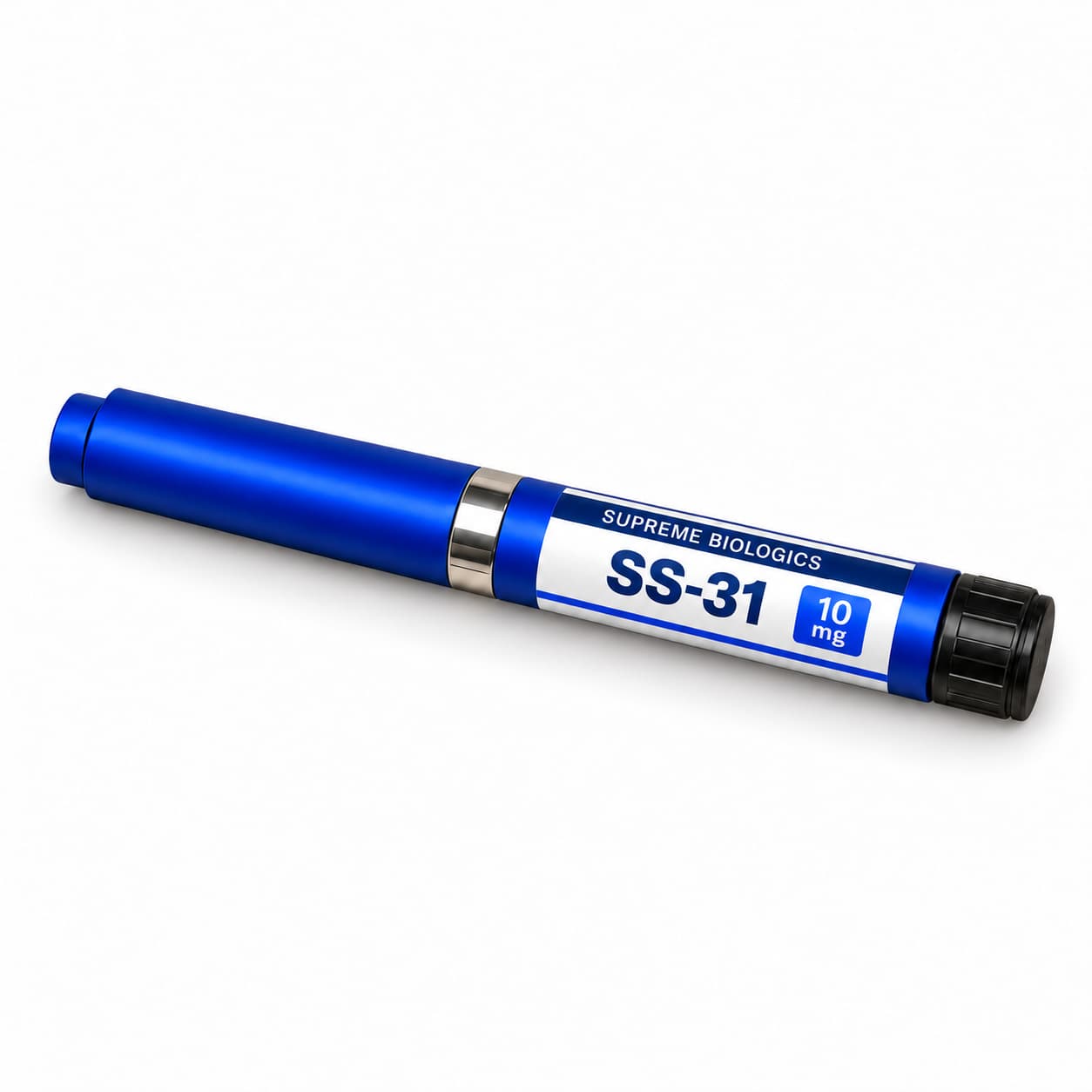
- Multi-dose pen — Keep refrigerated at 2–8°C continuously. The approximate stability window is 30–45 days from the date mixed, depending on the peptide. Follow the product-specific expiry on the label.
- BAC water — Keep bacteriostatic water refrigerated at 2–8°C. Follow the storage, expiry and discard instructions on the product label.
- Nasal spray — Store the nasal spray at room temperature. Follow the storage and expiry instructions on the product label.
Related research
Further reading on SS-31
About SS-31
What is SS-31?
SS-31 (elamipretide; also published as Bendavia and MTP-131) is a cell-permeable aromatic-cationic tetrapeptide that accumulates in the inner mitochondrial membrane. There it binds cardiolipin, the phospholipid that supports the electron-transport-chain complexes and cristae structure.
What is the half-life of SS-31?
The reported half-life of SS-31 is ~3–5 hours; accumulates in mitochondria. Half-life figures come from published pharmacokinetic studies and vary with the experimental model and formulation.
What class of compound is SS-31?
SS-31 is classified as: Mitochondria-targeted tetrapeptide. In the literature it is also referred to as Elamipretide / Bendavia.
In which research areas is SS-31 studied?
Published research on SS-31 includes: Mitochondrial bioenergetics and cardiolipin biology; Animal models of age-related decline in skeletal-muscle and cardiac mitochondrial function; Ischaemia–reperfusion injury models; Clinical investigation in primary mitochondrial myopathy and Barth syndrome.
What is the regulatory status of SS-31?
Elamipretide has been evaluated in clinical trials; the MMPOWER-3 trial in primary mitochondrial myopathy did not meet its primary endpoint. Regulatory status differs by jurisdiction and indication.
SS-31 research products
All products →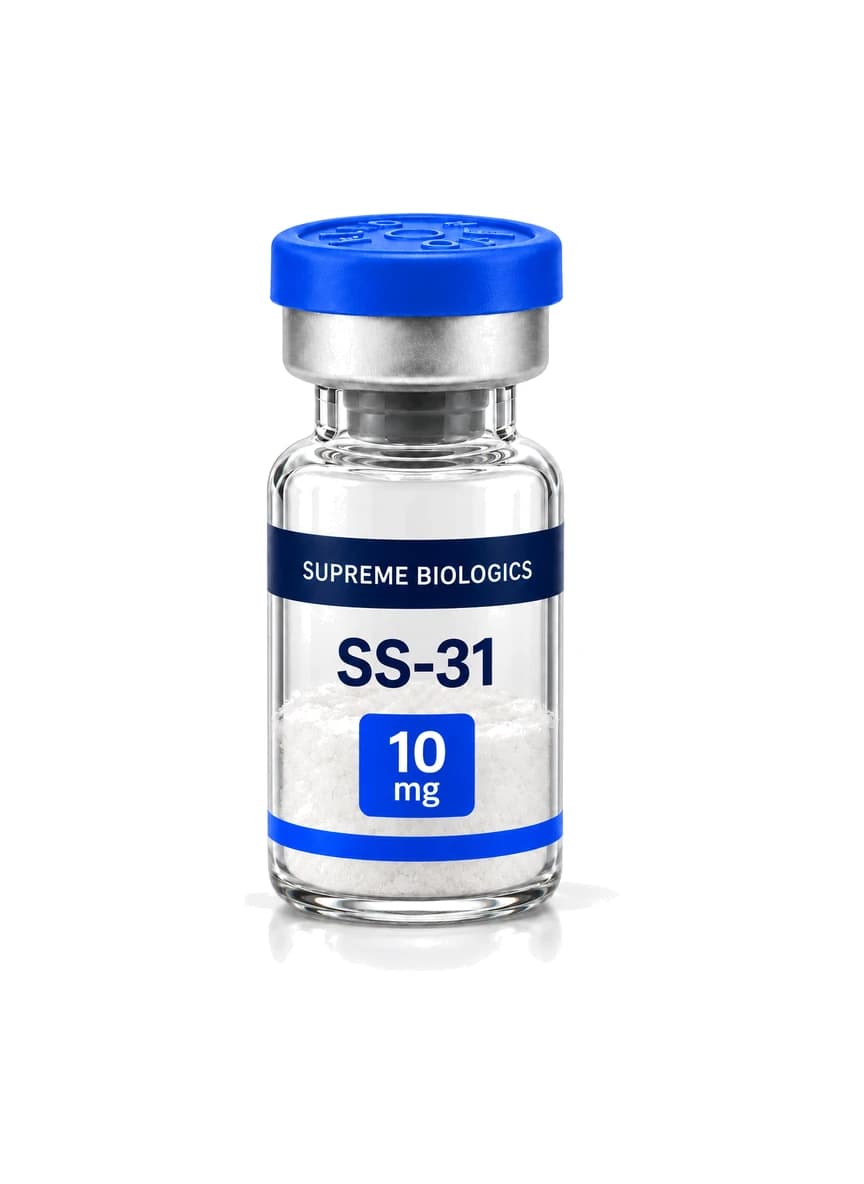

Glossary entries describe research pharmacology for in-vitro and laboratory contexts only.