Glossar · Mitochondria-targeted tetrapeptide
SS-31
Auch bekannt als: Elamipretide · Bendavia · MTP-131 · إس إس-31
- Substanzklasse
- Mitochondria-targeted tetrapeptide
- Halbwertszeit
- ~3–5 hours (subq); concentrates >1000× in mitochondria
- Übliche Dosierung
- 5–40 mg/day (subq)
- Applikationsweg
- subq
Mechanism
SS-31 (Elamipretide, also published as Bendavia and MTP-131) is a cell-permeable aromatic-cationic tetrapeptide engineered to concentrate selectively in the inner mitochondrial membrane — accumulating at concentrations more than 1,000× higher than in cytoplasm. Once embedded in the inner membrane, SS-31 binds reversibly to cardiolipin, the signature phospholipid that anchors electron-transport-chain complexes I–V and shapes the cristae folds where oxidative phosphorylation occurs.
The functional consequence is stabilization of cardiolipin–cytochrome-c interaction and protection against cardiolipin peroxidation under oxidative stress. In aged or diseased mitochondria — where cardiolipin oxidation drives cristae unfolding, electron leak, and the senescence-associated mitochondrial dysfunction signal — SS-31 restores cristae architecture, reduces reactive oxygen species (ROS) output, and recouples electron flow to ATP synthesis. Unlike conventional antioxidants that scavenge ROS after the fact, SS-31 acts upstream by preventing the cardiolipin damage that causes excess ROS in the first place.
Across preclinical models, SS-31 has reversed age-related ATP deficits in muscle, restored coupling efficiency in failing cardiomyocytes, normalized ocular mitochondrial function in dry-AMD models, and improved exercise capacity in mitochondrial myopathy patients. The MMPOWER-3 trial in primary mitochondrial myopathy did not meet its primary endpoint, but secondary measures and the broader cardiolipin-protection mechanism have driven continued research interest in age-related mitochondrial decline as the cleaner target.
Typical protocol
- Starter: 5 mg SC daily × 8 weeks. Sufficient to register changes in subjective energy and exercise tolerance in users with measurable mitochondrial decline.
- Advanced: 20–40 mg SC daily × 8–12 weeks. Higher doses are used in the published myopathy and ophthalmology protocols; titrate up only if 5–10 mg has produced detectable response without side effects.
- Cycle length: 8–12 weeks on / 4 weeks off. Mitochondrial biogenesis and cardiolipin remodeling take weeks — short cycles miss the signal.
- Reconstitution: 10 mg vial + 2 mL bacteriostatic water → 5 mg/mL. On a U-100 insulin syringe, 20 IU = 0.2 mL = 1 mg; 100 IU = 1.0 mL = 5 mg. Inject SC, abdomen or thigh, rotating sites.
Who it's for
Research framing: longevity-focused users with measurable mitochondrial decline signals — declining VO₂max relative to baseline, post-exertional fatigue exceeding what training load explains, age-related decline in recovery between sessions, or imaging-confirmed mitochondrial myopathy. Also studied in cardiovascular research as a cardiolipin-stabilizing intervention during ischemia–reperfusion injury and in ophthalmology research for inherited and age-related retinal mitochondrial dysfunction.
Less compelling as a generic "energy booster" for users with healthy mitochondria — the protective signal scales with how much cardiolipin damage exists to begin with. Lean, young, well-trained users will register less than aged or compromised populations.
Stacks well with
- nad plus 100mg supreme biologics — NAD+ replenishes the substrate pool that mitochondrial enzymes need; SS-31 restores the structural environment those enzymes operate within. Common pairing in longevity protocols where both NAD+ availability and cristae integrity are declining.
- mots c 10mg supreme biologics — mitochondrial-derived peptide that signals metabolic flexibility and nuclear-mitochondrial coupling; complementary to SS-31's structural-protection mechanism.
- epithalon 50mg supreme biologics — pineal-axis longevity peptide; pairs cleanly in age-management stacks targeting parallel anti-senescence pathways.
Watch-outs
- Injection-site reactions (erythema, pruritus, transient induration) are the most consistently reported side effect across human trials. Rotate sites.
- Headache, fatigue, and GI upset reported at higher doses (>20 mg/day) — usually transient through the first 2–4 weeks.
- Avoid in active oncology research models — mitochondrial restoration could theoretically support proliferating tumor metabolism. The mechanism is uncharacterized in this context; the conservative protocol excludes active malignancy.
- Effect signal is subtle and slow. Users expecting stimulant-like acute response will be disappointed; the signal is exercise tolerance, recovery, and energy floor over weeks-to-months, not days.
SS-31-Forschungsprodukte
Alle Produkte →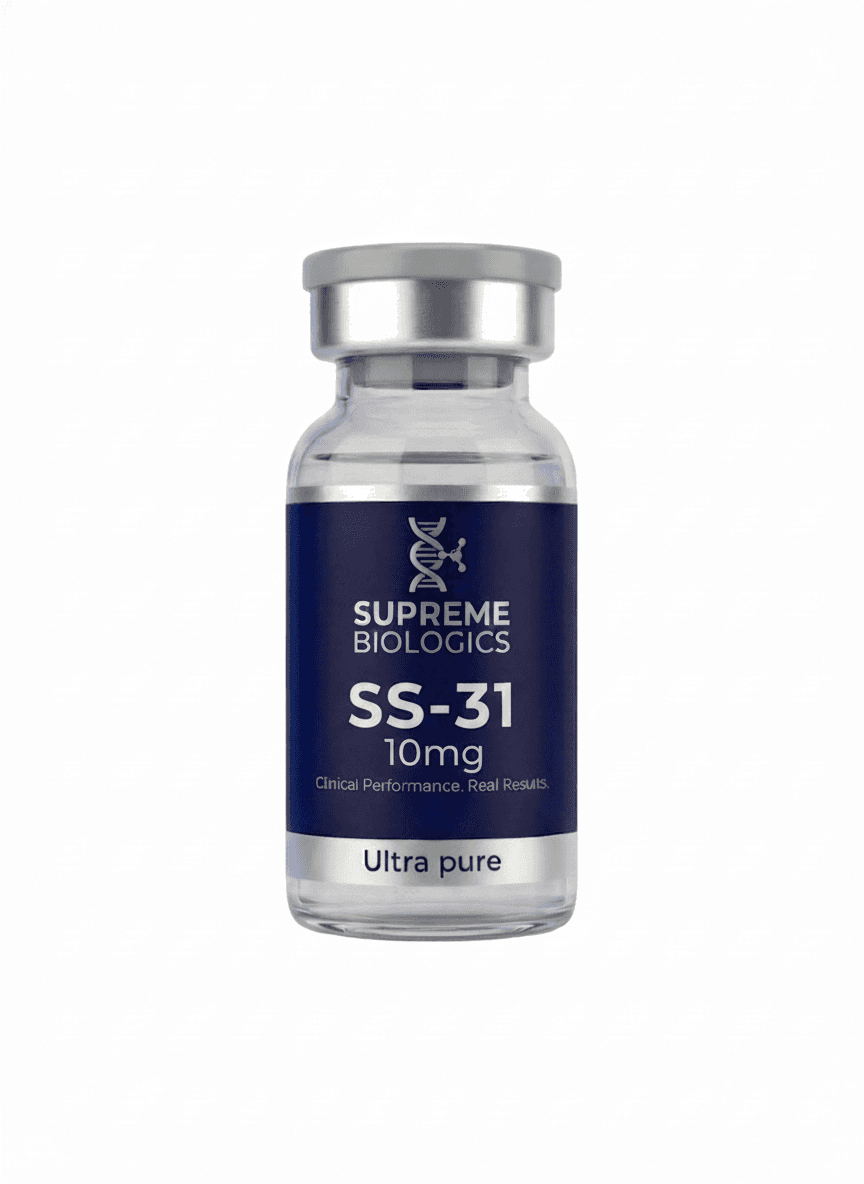
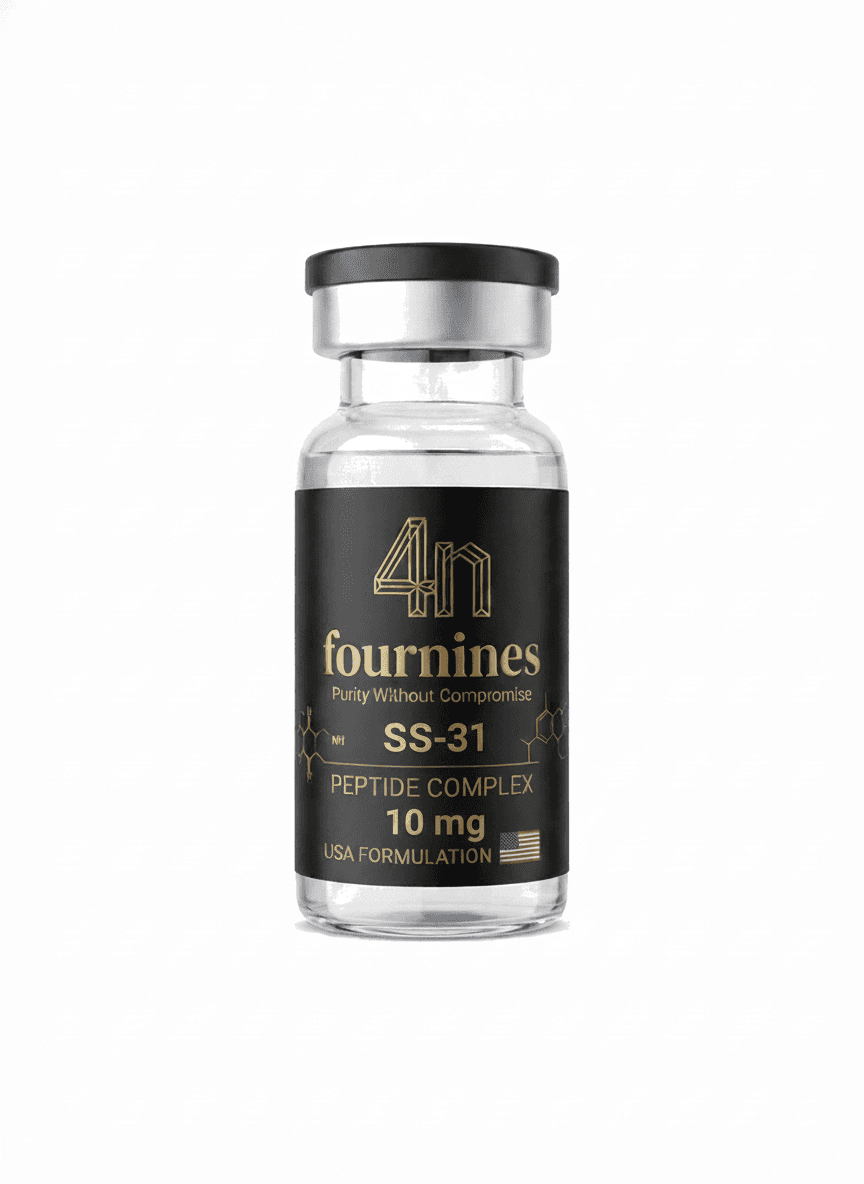
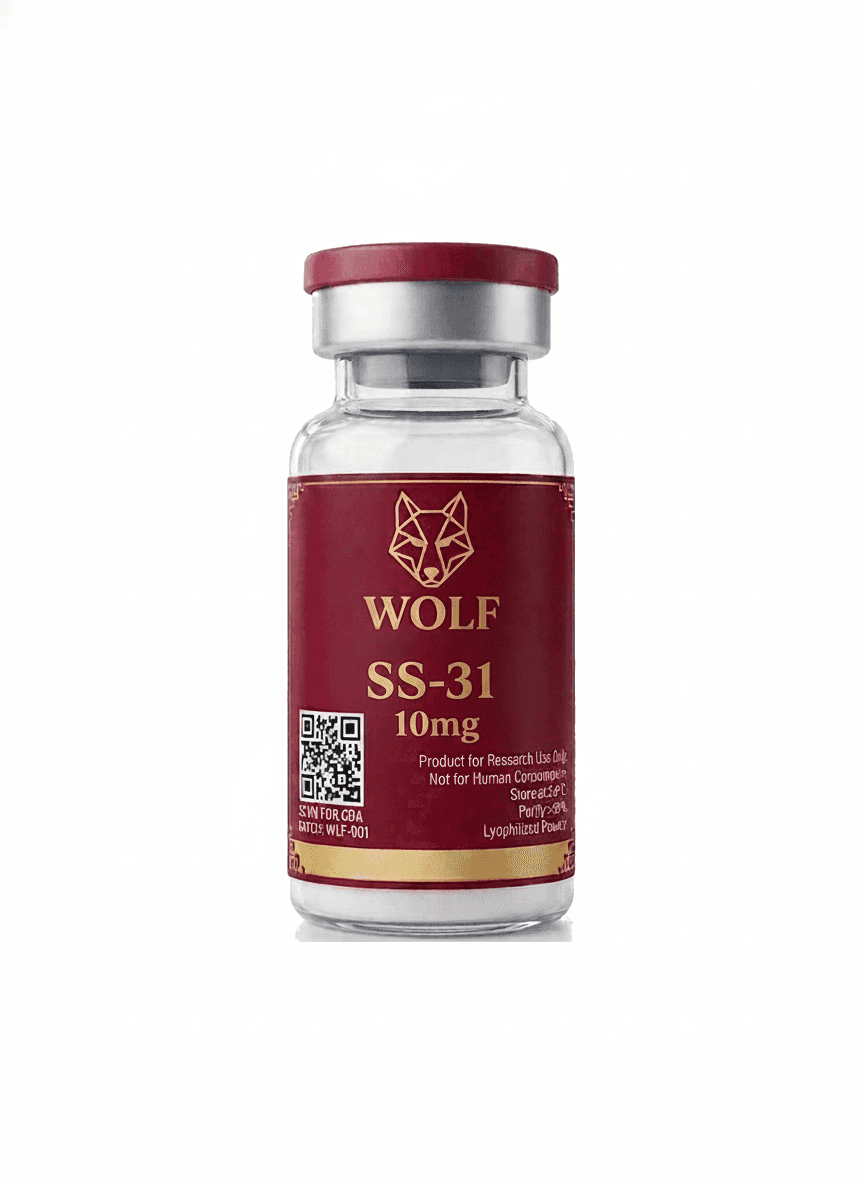
Glossareinträge beschreiben die Forschungspharmakologie ausschließlich für In-vitro- und Laborkontexte.