Dermatologisk forskningspilar
Beauty og hudbiologi: kobberpeptider, kollagensignalering og dermal forskning
Hudbiologi er et av de mest aktive områdene for peptidforskning fordi huden er unikt tilgjengelig for intervensjonsstudier — topikal applikasjon, biopsier og bildediagnostiske endepunkter fungerer renere for dermal forskning enn for dypere organsystemer. Peptidklassen som dominerer dette feltet er kobberpeptider, ledet av GHK-Cu.
Denne portalen dekker det dermatologiske forskningslandskapet: biologien bak hudaldring, hvordan kobberpeptider samtidig krysser flere aldringskjennetegn, og de supplerende forbindelsene som inngår i dermale forskningsprotokoller (BPC-157 for sårheling-forskning, PT-141 for dermale effekter via melanokortinveien).
Head-to-head
Hvorfor hudaldring er et flerveiers problem
Synlig hudaldring drives av fem distinkte biologiske prosesser som virker parallelt: kollagennedbrytning (kollagensyntesen faller ~1–1,5 % per år etter fylte 25); glykering (advanced glycation end-products [AGEs] tverrbinder kollagenfibre og reduserer elastisitet); oksidativt stress (UV og metabolske frie radikaler skader cellulært DNA og proteiner); redusert vekstfaktorsignalering (peptidene som koordinerer vevsreparasjon blir mindre rikholdige); og stamcelleutmatting (dermale progenitorcellepopulasjoner avtar).
En forskningsforbindelse som bare adresserer én av disse prosessene gir avgrensede effekter. Grunnen til at GHK-Cu har dominert den dermale forskningslitteraturen i 40+ år, er at den krysser flere veier samtidig — modulering av genuttrykk for over 4 000 humane gener i den toneangivende Broad Institute-studien fra 2014, som spenner fra DNA-reparasjon og antioksidantforsvar til kollagensyntese og oppløsning av inflammasjon.
GHK-Cu: forskningens arbeidshest
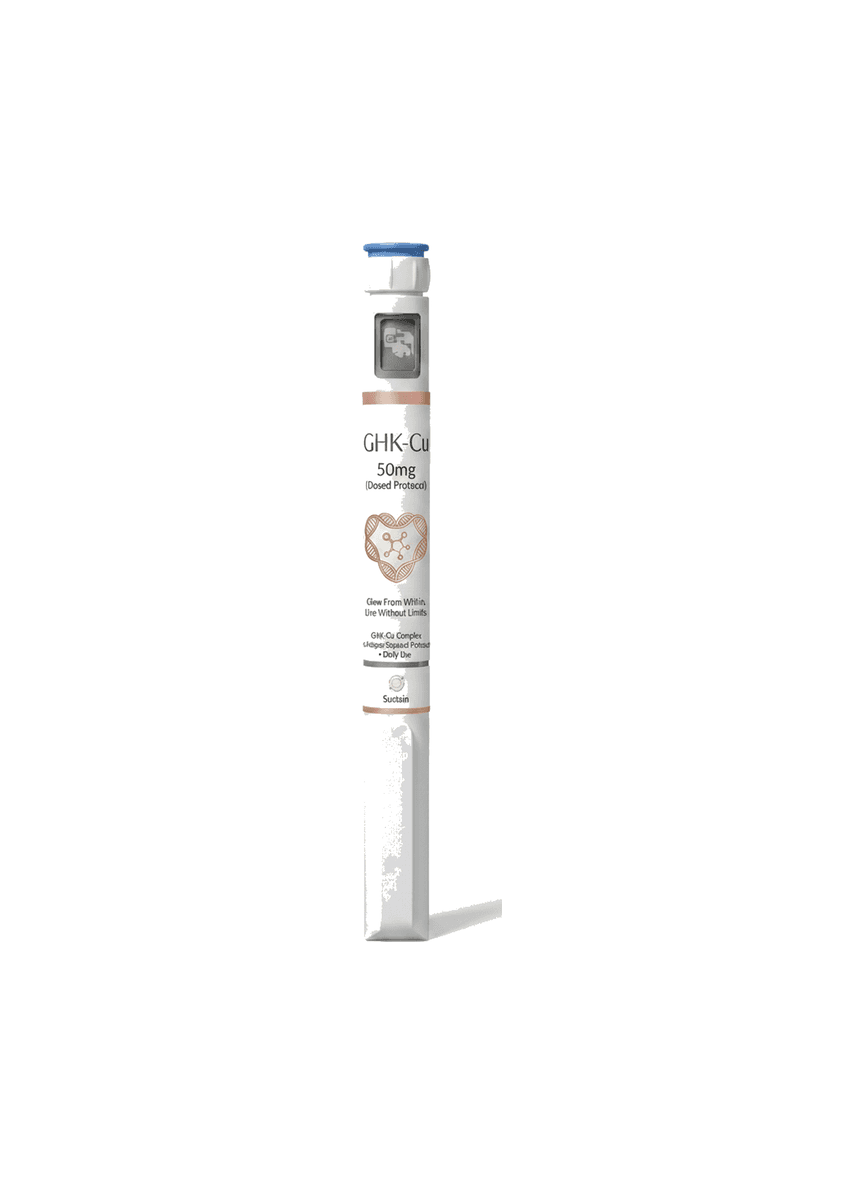
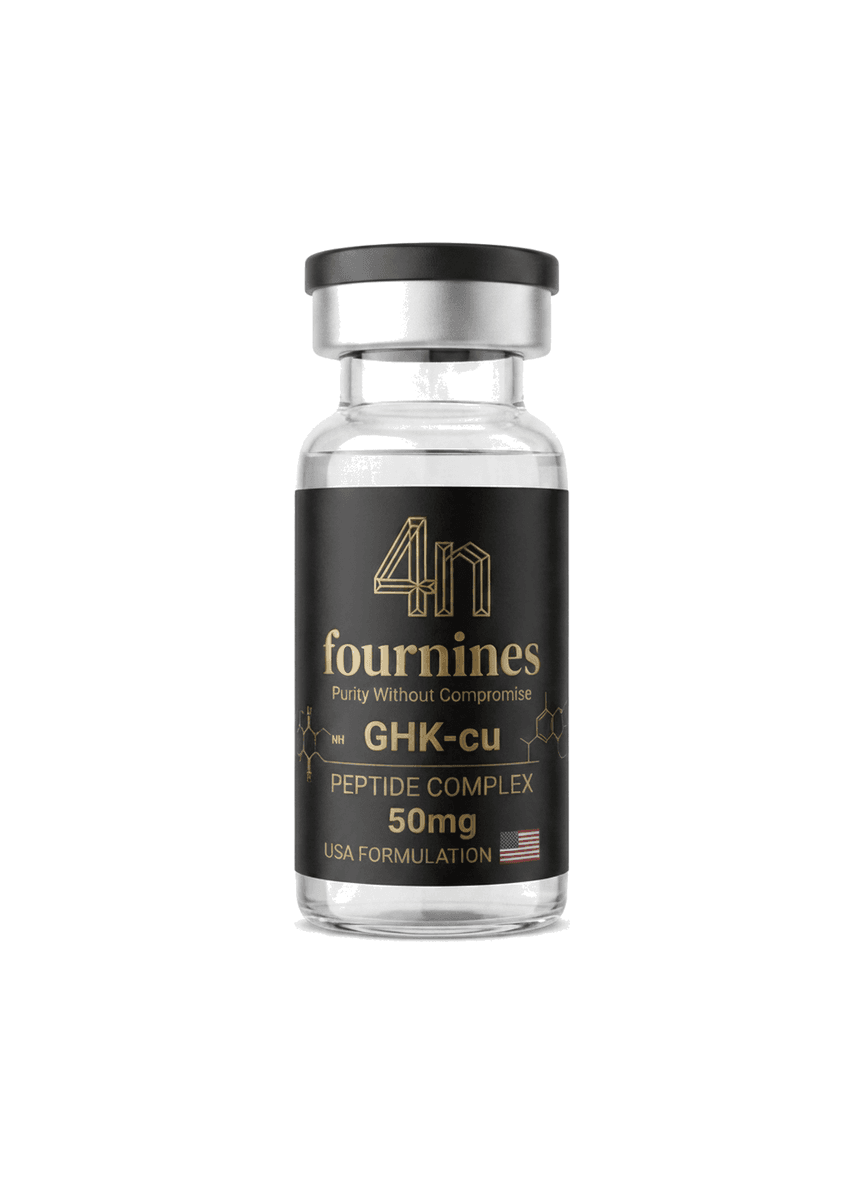
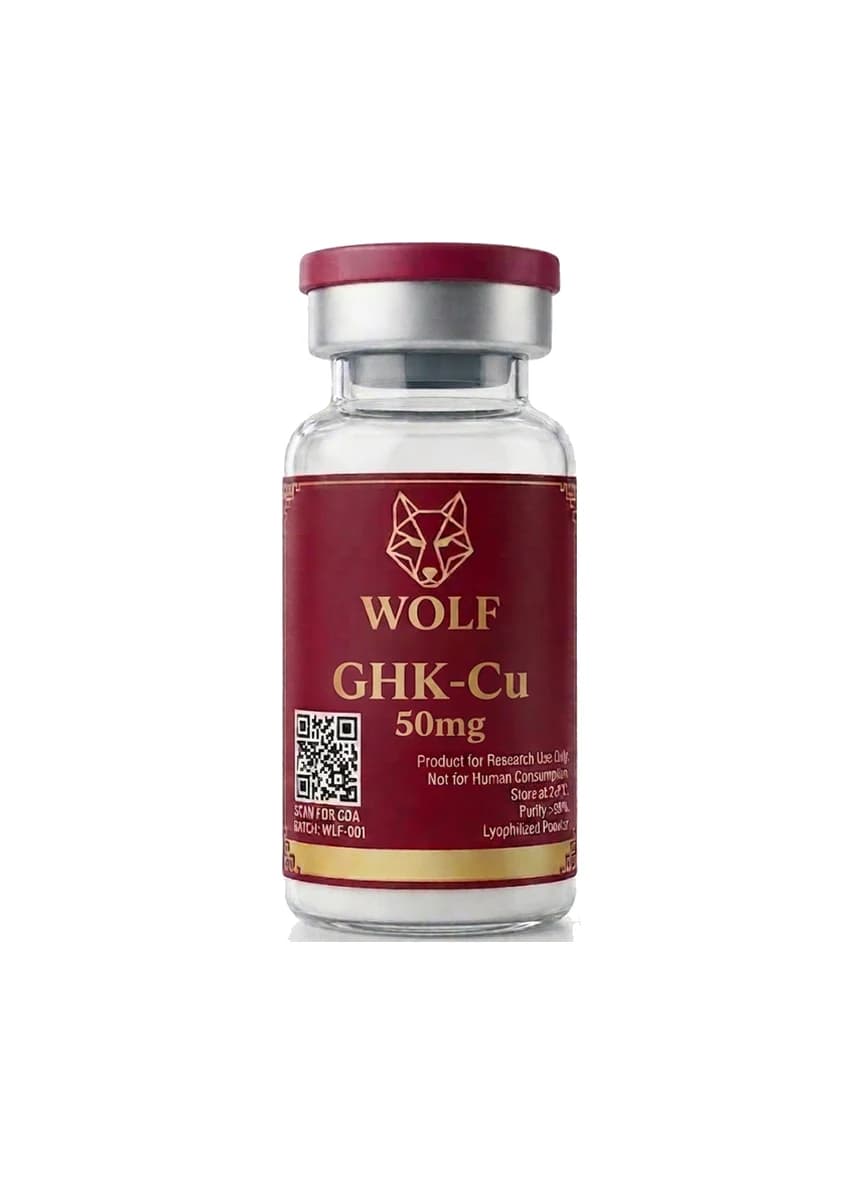
GHK-Cu er et tripeptid (glycyl-L-histidyl-L-lysine) som i humant plasma naturlig er kompleksbundet med kobber. Plasmakonsentrasjonen faller fra ~200 ng/mL ved 20 års alder til ~80 ng/mL rundt 60 — en aldersrelatert nedgang som samsvarer rent med observert nedgang i vevsreparasjonsevne. Det er derfor eksogen GHK-Cu-tilførsel er en av de mest parsimoniske forskningsintervensjonene i litteraturen om hudaldring.
Forskningsendepunkter dokumentert i publiserte data: stimulerer syntese av kollagen type I og III i fibroblastkultur; øker produksjonen av hyaluronsyre og glykosaminoglykaner; oppregulerer antioksidantenzymene superoxide dismutase (SOD) og glutation; modulerer matrix metalloproteinases (MMPs) til fordel for organisert kollagenremodellering; støtter funksjonen til hårsekkens stamceller.
Administrasjonsveier: topikal (1–2 % i egnet vehikkel) for utelukkende dermal forskning; subkutan injeksjon (1–3 mg/dag) for systemisk forskning som strekker seg utover huden. Topikal er standard i kosmeseutisk forskning; injiserbar brukes for sårheling og bredere regenerativ forskning.
Supplerende forbindelser i dermal forskning
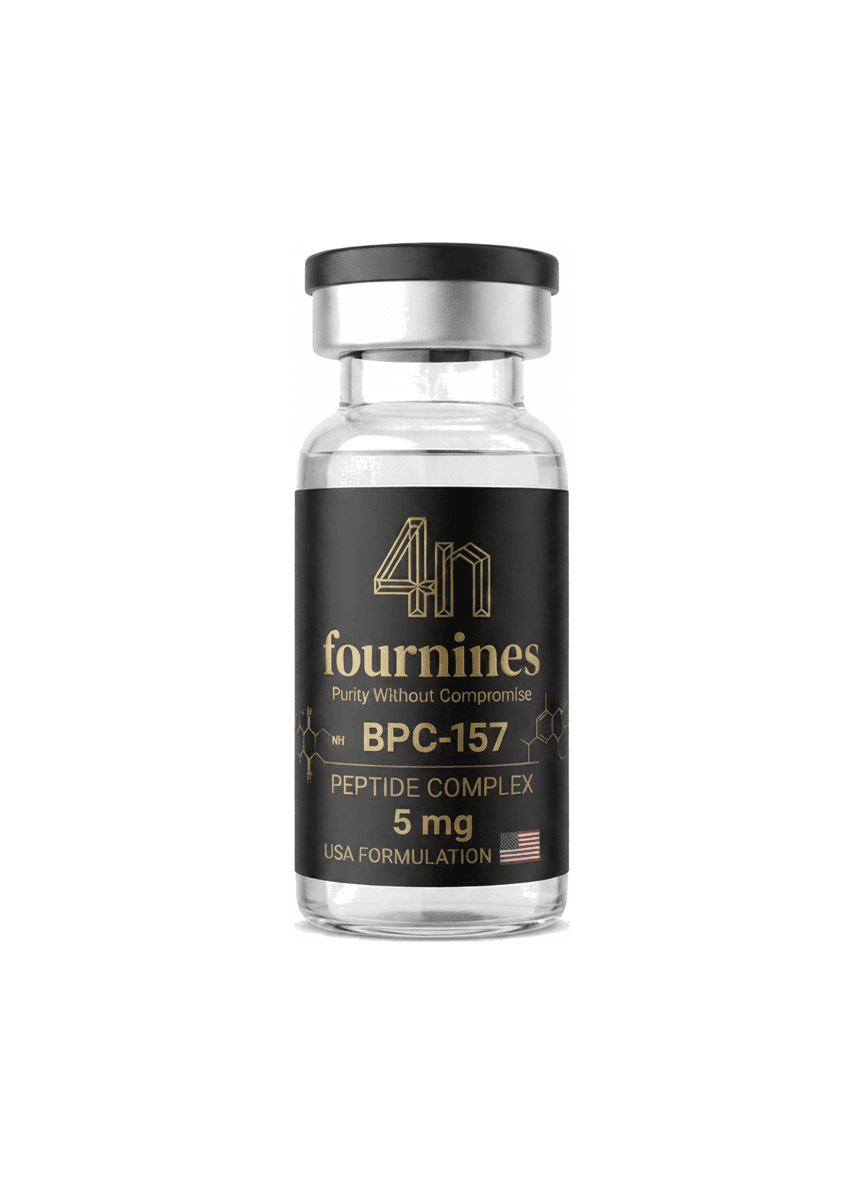
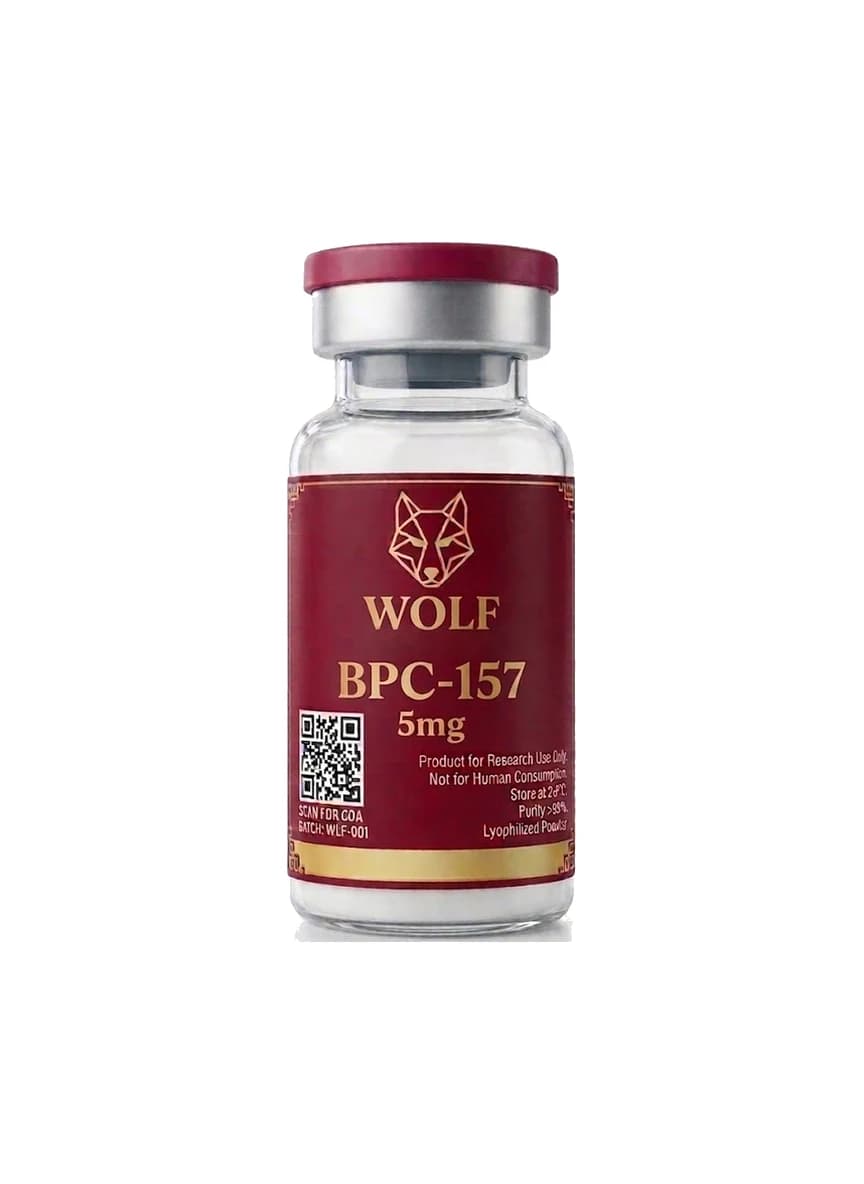
BPC-157 krysser dermal forskning gjennom sårheling — angiogenesemekanismen den aktiverer driver kapillærdannelse i hudskademodeller like pålitelig som i senemodeller. GLOW Stack og liknende kuraterte forskningsbundler kombinerer GHK-Cu + BPC-157 + NAD+ for å dekke kollagensignalering, angiogenese og cellulær NAD+-nedgang i én protokoll.
PT-141 (Bremelanotide) krysser dermal forskning gjennom sin mekanisme på melanokortinreseptorer. MC1R på melanocytter styrer pigmenteringsbiologi; forskning på PT-141 strekker seg utover hovedanvendelsen libido/MC4R og inn i pigmenterings- og solbruningsveier.
Langlivspeptider — Epitalon, MOTS-c, NAD+ — krysser forskning på hudaldring via rammeverket hallmarks of aging. Hudaldring er ikke en isolert prosess; den speiler systemisk aldringsbiologi, og dermale endepunkter responderer på oppstrøms intervensjoner rettet mot regulering av genuttrykk, mitokondriell funksjon eller sirtuinsignalering.
Frequently asked
Topikal eller injiserbar GHK-Cu for forskning?
Topikal (1–2 % i vehikkel) for kosmeseutisk og utelukkende dermal forskning — det samsvarer med publisert kosmetikkvitenskapelig litteratur. Injiserbar for forskning som strekker seg utover huden, inn i sårheling, regenerativ medisin eller systemiske genuttrykksstudier.
Påvirker GHK-Cu-tilførsel egentlig målbare endepunkter i forskning?
Ja, konsekvent. Broad Institutes genuttrykksstudie fra 2014, kollagensyntesesassays i fibroblastkultur og sårhelingsdyremodeller viser alle reproduserbare effekter. Det vanskeligste endepunktet å måle er "synlig hudaldring" — endringer på biomarkørnivå er lettere å dokumentere enn estetiske.
Kan GHK-Cu stackes med andre vevsreparasjonspeptider?
Ja — den kanoniske beauty-forskningsstacken er GHK-Cu + BPC-157 (+ NAD+). GHK-Cu driver kollagen- og matriksremodellering; BPC-157 leverer angiogenesen som støtter denne remodelleringen. Det er ingen reseptorkonkurranse mellom dem.
Hvordan ser langtidsforskningslitteraturen om GHK-Cu ut?
40+ år — GHK-Cu har en av de lengste publiserte forskningshistoriene blant alle peptider. Loren Pickarts grunnleggende arbeid strekker seg over tiår, og moderne studier (Broads genuttrykksarbeid fra 2014 er best kjent) har utvidet rekkevidden fra dermatologi til cellulær signalering og anti-aging i bredere forstand.
Research products for this pillar
All skin health →
All compounds referenced are chemical reagents for laboratory analysis. See our Terms & Conditions.