Ordliste · GH C-terminal fragment
AOD-9604
Også kjent som: Lipolytic fragment 176-191 · hGH 176-191
- Klasse
- GH C-terminal fragment
- Halveringstid
- ~20 minutter
- Typisk dose
- 250–500 mcg/dag
- Administrasjonsvei
- subq
Virkningsmekanisme
AOD-9604 er rester 176–191 av humant veksthormon — det C-terminale fragmentet som inneholder den lipolytiske aktiviteten til hGH. Da forskere kløvde hGH i funksjonelle regioner, beholdt dette fragmentet fettmobiliseringseffekten samtidig som det mistet de glukoseforstyrrende og IGF-1-økende egenskapene til det fulle molekylet. Mekanismen involverer stimulering av lipolyse i fettvev gjennom signalveier som ligger nær β3-adrenerg signalering, og øker frigjøringen av fettsyrer fra fettceller uten den metabolske forstyrrelsen som følger med fullt GH.
Den smale målrettingen er både salgsargumentet og den ærlige begrensningen. AOD-9604 bygger ikke muskler, hever ikke IGF-1 nevneverdig, og forstyrrer ikke insulinfølsomheten — noe som gjør det til et av de få kroppssammensetningspeptidene som er aktuelle for brukere som må holde seg metabolsk rene (diabetesnære brukere, de på GLP-1-behandling, idrettsutøvere under hormonpanelkontroll). Kompromisset er at den lipolytiske effekten, selv om den er reell og målbar i studier, er moderat. Den akselererer prosessen; den erstatter ikke kalorimatematikken.
Halveringstiden er omtrent 20 minutter, så doseringen må tidfestes nøyaktig — fastende tilstand, ideelt etterfulgt av kondisjonstrening, for å maksimere det lipolytiske vinduet før gjenopptak av fettsyrer skjer. Den korte halveringstiden betyr også ingen akkumulering og rask clearance, noe som gjør det enkelt å sykle inn og ut uten overgangshåndtering.
Typisk protokoll
- Nybegynner: 250 mcg SC fastende morgen, én gang daglig. Følg umiddelbart opp med fastende kondisjonstrening (20–30 min) for å utnytte de mobiliserte fettsyrene.
- Avansert: 500 mcg SC fastende AM × 6–10 ukers sykluser. I Recomp Stack går det sammen med CJC + ipamorelin med omtrent 300 mcg per dose.
- Sykluslengde: 6–10 uker på / 2 uker av. Avtakende avkastning oppstår etter uke 8 ettersom fettreseptorfølsomheten tilpasser seg.
- Rekonstituering: 5 mg hetteglass + 2 mL bakteriostatisk vann → 2,5 mg/mL. 10 IU på en U-100 insulinsprøyte = 0,1 mL = 250 mcg.
Hvem det er for
Fettap, spesielt brukere som ønsker GH-aksens lipolytiske drivkraft uten GLP-1-skala appetittdemping eller fullt GH's glukoseforstyrrelse. Fungerer best i en allerede mager bruker som retter seg mot gjenstridig fettvev — de siste 2–5 kg på en ellers ren kroppssammensetning. Mindre egnet for brukere betydelig over målvekt, der kalori-intervensjon og appetittstyring vil flytte nålen langt mer enn direkte lipolytisk stimulering.
Stables godt med
- cjc 1295 dac 2mg — GHRH-støtte forsterker det lipolytiske vinduet ved å øke den generelle GH-akseaktiviteten sammen med AODs direkte virkning.
- ipamorelin 5mg — GH-puls-paring som holder den anabole siden av aksen aktiv under en kutt, og bevarer mager masse.
- recomp stack cjc ipamorelin aod — forhåndspakket recomp-stack som kombinerer alle tre.
- Semaglutide 5mg — annen mekanisme (appetittdemping vs. direkte lipolyse); komplementær på krevende kutt der både kaloriereduksjon og direkte fettmobilisering ønskes.
Vær oppmerksom på
- Effekten er reell, men moderat. Forvent inkrementell forbedring i fettapsraten, ikke GLP-1-skala vektreduksjon. Sett forventningene deretter.
- Krever et reelt kaloriunderskudd. AOD-9604 akselererer lipolysen innenfor det underskuddet — den skaper ikke underskuddet selv.
- Avtakende avkastning kommer til syne etter uke 8. Sykl av før effekten flater ut i stedet for å kjøre kontinuerlig og lure på hvorfor det sluttet å virke.
Om AOD-9604
Hva er AOD-9604?
AOD-9604 er restene 176–191 av humant veksthormon — det C-terminale fragmentet som inneholder hGHs lipolytiske aktivitet. Da forskere spaltet hGH i funksjonelle regioner, beholdt dette fragmentet fettmobiliseringseffekten samtidig som det kvittet seg med de glukoseforstyrrende og IGF-1-hevende egenskapene til det fullstendige molekylet.
Hva er halveringstiden til AOD-9604?
Plasmahalveringstiden til AOD-9604 er rapportert til ~20 minutter. Dette er en forskningsreferanseverdi hentet fra publiserte farmakokinetiske studier — administrasjonstidspunkter og doseringsintervaller i publiserte protokoller er utformet rundt denne verdien.
Hva er det typiske forskningsdoseområdet for AOD-9604?
Publiserte forskningsprotokollintervaller for AOD-9604 ligger mellom 250–500 mcg/dag, administrert subkutant. Disse tallene refererer kun til doseringen i forskningslitteraturen — de er ikke en klinisk anbefaling, og AOD-9604 leveres her strengt som et forskningsreagens.
Hvilken forbindelsesklasse tilhører AOD-9604?
AOD-9604 tilhører klassen GH C-terminale fragmenter blant forskningspeptider. Det refereres også til i litteraturen som Lipolytisk fragment 176-191 eller hGH 176-191. Hver GH C-terminal fragment-forbindelse deler overlappende farmakologi, men skiller seg i reseptorselektivitet, halveringstid og rapporterte forskningsanvendelser.
Hva er den typiske forskningsprotokollsyklusen for AOD-9604?
Starter: 250 mcg SC fastende om morgenen, én gang daglig. Følg umiddelbart opp med fastende kondisjonstrening (20–30 min) for å utnytte de mobiliserte fettsyrene.
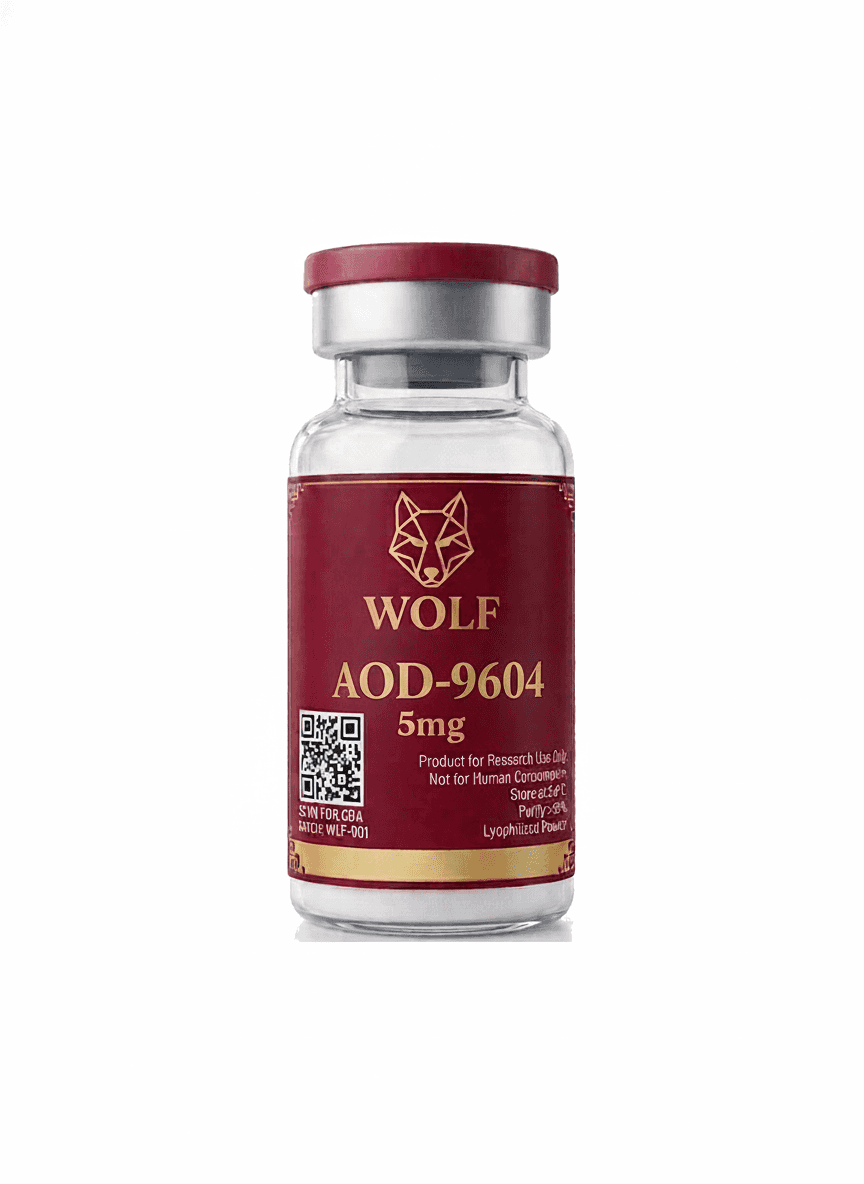
AOD-9604-forskningsprodukter
Alle produkter →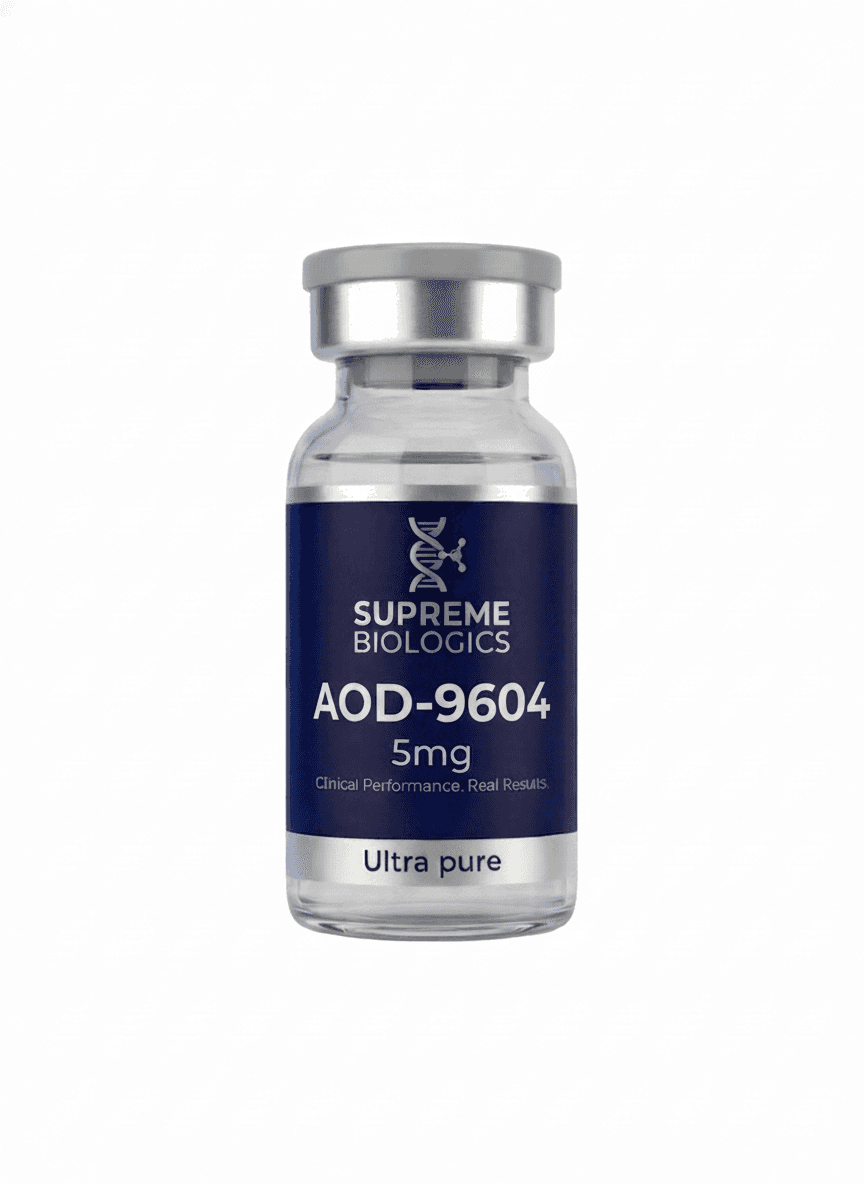
Ordlisteoppføringer beskriver forskningsfarmakologi utelukkende for in-vitro- og laboratoriekontekster.