Ordliste · restitusjons- + dermal-stack
Beauty Stack (BPC-157 + TB-500 + GHK-Cu)
Også kjent som: BTG stack · Regen Stack
- Klasse
- restitusjons- + dermal-stack
- Halveringstid
- blandet (se komponenter)
- Typisk dose
- per komponent; leveres forhåndsdosert
- Administrasjonsvei
- subq / topisk (GHK)
Virkningsmekanisme
Beauty Stack samler tre peptider som adresserer hele bløtvevsreparasjonskaskaden fra forskjellige vinkler, med betydelig overlapping i dermal- og bindevevsvedlikehold. BPC-157 (Body Protection Compound) oppregulerer VEGFR2-signalering for å drive angiogenese ved skadesteder — nydannelse av kapillærer akselererer leveringen av næringsstoffer og oksygen til skadet vev. TB-500 (Thymosin Beta-4) virker systemisk via sekvestrering av aktinmonomerer og cellemigrasjon, og fremmer den organiserte bevegelsen av reparasjonsceller (fibroblaster, keratinocytter, endotelceller) inn i skadet eller aldrende vev i hele kroppen. GHK-Cu (kobber-tripeptid) gir kobberkofaktoren som trengs for lysyloksidaseaktivitet, som tverrbinder kollagen- og elastinfibrene under matrisesyntese — uten tilstrekkelig kobbersignalering er ny matrise strukturelt svak.
Disse tre mekanismene er genuint komplementære og sekvensielle i reparasjonskaskaden. BPC driver den vaskulære infrastrukturen for helbredelse; TB-500 driver cellemigrasjonen som befolker helbredelsessonen; GHK-Cu driver matrisekvaliteten på det disse cellene bygger. Dette er grunnen til at de stables mer effektivt enn noen enkelt komponent. Den samme vevsreparasjonslogikken strekker seg til hud: BPC støtter dermal vaskularitet, TB-500 støtter epidermal celleomsetning, og GHK-Cu driver direkte kollagen- og elastinremodelleringen som bestemmer hudens strukturelle kvalitet.
GHK-Cu er unik i stacken fordi den er genuint effektiv både subkutant (systemisk distribusjon) og topisk (direkte dermal penetrasjon). Når hudkvalitet er et primært mål, gir topisk GHK-Cu påført ansiktet eller målområdet daglig lokale effekter utover hva subq alene oppnår.
Typisk protokoll
- Nybegynner: BPC-157 250 mcg SC én gang daglig (proksimalt til skade hvis aktuelt) + TB-500 5 mg SC to ganger ukentlig i 2 uker (lastefase), deretter 2 mg SC én gang ukentlig (vedlikehold) + GHK-Cu 1 mg SC annenhver dag, eller topisk 1–2 % krem/serum påført daglig. Kjør 6 uker.
- Avansert: BPC-157 500 mcg SC delt AM/PM + TB-500 lasting som over → vedlikehold + GHK-Cu 1 mg SC daglig. Kjør 8 uker for betydelig bløtvevsskade eller postoperativ restitusjon.
- Sykluslengde: 6–8 uker på / 2–4 uker av. Reparasjonsvinduet lukkes når akutt helbredelse er løst; å fortsette utover helbredelsesvinduet er avtakende avkastning. Topisk GHK-Cu kan opprettholdes lenger uavhengig hvis hudkvalitet er et pågående mål.
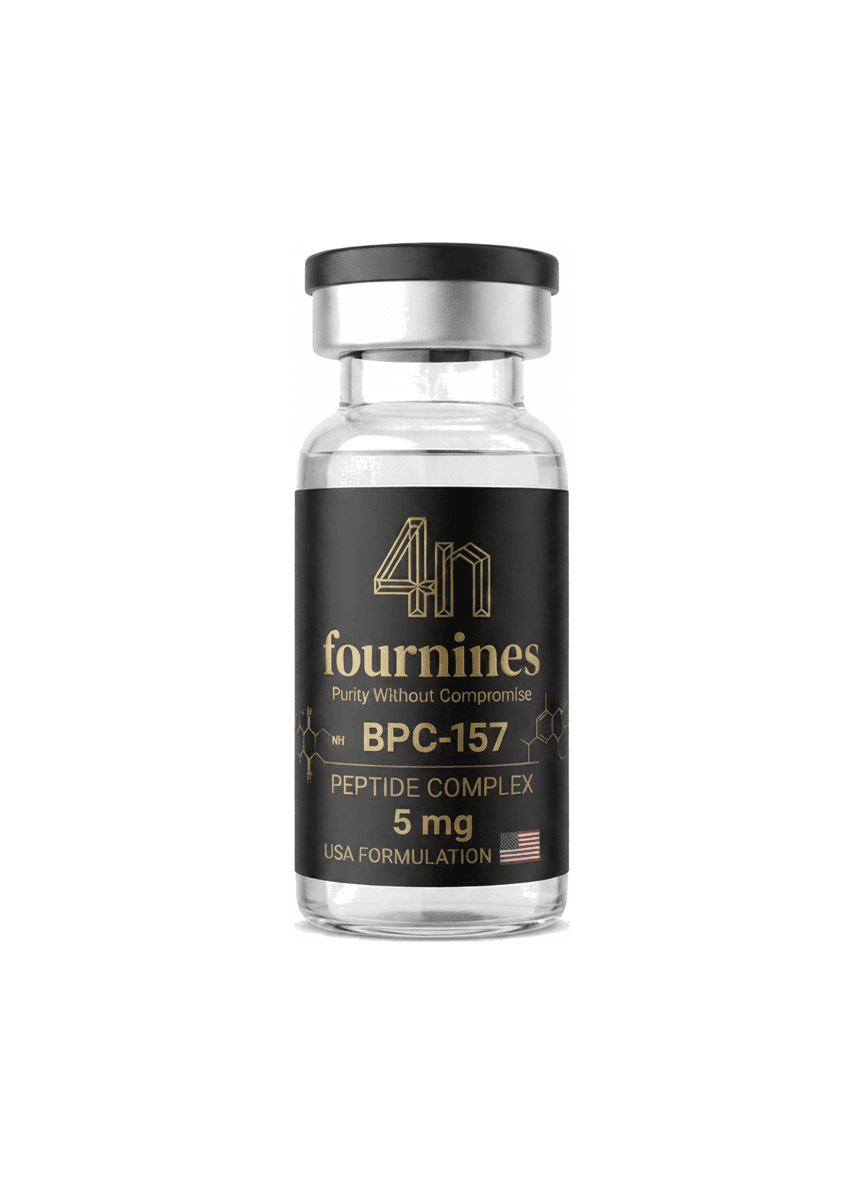
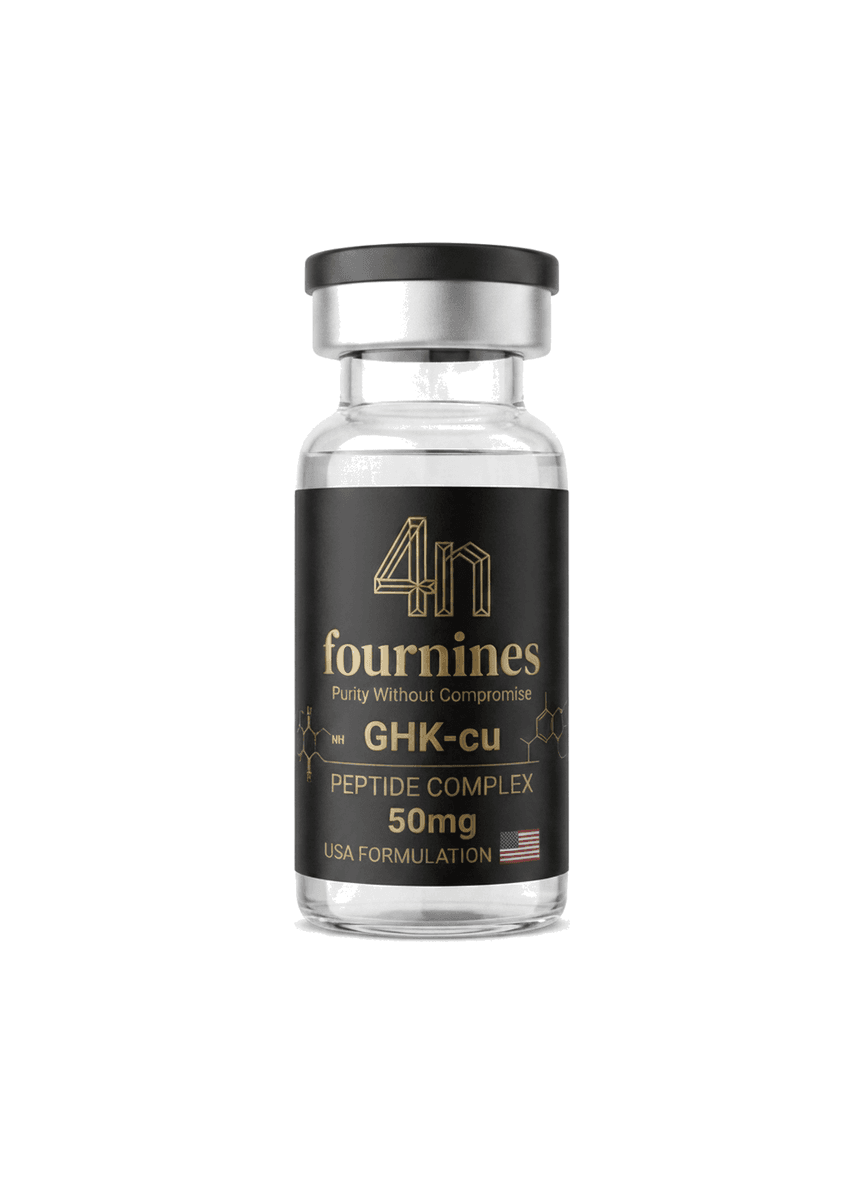
- Rekonstituering: Hver komponent per sin individuelle oppføring. BPC-157: 5 mg hetteglass + 2 mL bakteriostatisk vann → 2,5 mg/mL; 10 IU = 250 mcg. TB-500: 5 mg hetteglass + 1 mL bakteriostatisk vann → 5 mg/mL; 10 IU = 500 mcg; 40 IU = 2 mg. GHK-Cu: 50 mg hetteglass + 5 mL bakteriostatisk vann → 10 mg/mL; 10 IU = 1 mg.
Hvem det er for
Brukere som retter seg mot restitusjon og hud-/skjønnhetsmål samtidig — etter skade, etter operasjon, eller etter prosedyre, med en pågående interesse for bindevevs- og dermalt vedlikehold. Passer også for brukere i tunge treningsblokker som akkumulerer bløtvevsstress og ønsker både skadereduksjon og hud-/leddkvalitetsstøtte. Dermal restitusjon etter prosedyrer (microneedling, laser, kjemisk peeling) er et spesifikt brukstilfelle der den topiske GHK-Cu-komponenten skiller seg særlig ut.
Stables godt med
- epithalon 10mg — levetidsnær paring uten mekanismekonflikt. Epithalon adresserer pineal-/døgnrytme-/telomeraksen; Beauty Stack adresserer bløtvevs- og bindevevsreparasjon. Kan sykles samtidig for en omfattende vevskvalitets- + aldringsakseprotokoll.
Stacken er ellers designet for å være frittstående — BPC, TB-500 og GHK-Cu dekker allerede de relevante reparasjonsveiene. Å legge til ytterligere angiogene eller matrisepeptider er overflødig.
Vær oppmerksom på
- BPC-157 vil redusere smerte fra skadestedet. Dette er den forventede mekanismen, men det betyr at smertesignalet som normalt indikerer grensene for vevsbelastning, dempes. Hold treningsbelastningene konservative mens peptidet er aktivt — fraværet av smerte betyr ikke at vevet er fullstendig leget.
- Den topiske GHK-Cu-veien er valgfri. Hvis kun injeksjon foretrekkes (eller hvis hudforbedring ikke er en prioritet), leverer den fullstendige subq-tilnærmingen kobbersignalering systemisk og er fullt effektiv for vevsreparasjon. Den topiske ruten tilfører lokal dermal konsentrasjon som betyr noe for hudkvalitet, men er ikke nødvendig for skadeheldningsindikasjonen.
- Tre komponenter betyr tre rekonstituerte hetteglass å holde styr på. Merk hver med datoen for rekonstituering og oppbevar ved 4 °C. BPC-157 og TB-500 er stabile i 28–30 dager etter rekonstituering; sjekk GHK-Cu-stabilitetsvinduet fra leverandøren.
Om Beauty Stack (BPC-157 + TB-500 + GHK-Cu)
Hva er Beauty Stack (BPC-157 + TB-500 + GHK-Cu)?
Beauty Stack samler tre peptider som adresserer hele bløtvevsreparasjonskaskaden fra forskjellige vinkler, med betydelig overlapping inn i dermal og bindevevsvedlikehold. BPC-157 (Body Protection Compound) oppregulerer VEGFR2-signalering for å drive angiogenese ved skadesteder — ny kapillærdannelse akselererer levering av næringsstoffer og oksygen…
Hva er halveringstiden til Beauty Stack (BPC-157 + TB-500 + GHK-Cu)?
Plasmahalveringstiden til Beauty Stack (BPC-157 + TB-500 + GHK-Cu) er rapportert som blandet (se komponenter). Dette er en forskningsreferanseverdi hentet fra publiserte farmakokinetiske studier — administrasjonstidspunkter og doseringsintervaller i publiserte protokoller er utformet rundt denne verdien.
Hva er det typiske forskningsdoseområdet for Beauty Stack (BPC-157 + TB-500 + GHK-Cu)?
Publiserte forskningsprotokollintervaller for Beauty Stack (BPC-157 + TB-500 + GHK-Cu) ligger mellom per komponent; leveres ferdig dosert, administrert subkutant / topikalt (GHK). Disse tallene refererer kun til doseringen i forskningslitteraturen — de er ikke en klinisk anbefaling, og Beauty Stack (BPC-157 + TB-500 + GHK-Cu) leveres her strengt som et forskningsreagens.
Hvilken forbindelsesklasse tilhører Beauty Stack (BPC-157 + TB-500 + GHK-Cu)?
Beauty Stack (BPC-157 + TB-500 + GHK-Cu) tilhører klassen recovery + dermal stack blant forskningspeptider. Det refereres også til i litteraturen som BTG stack eller Regen Stack. Hver recovery + dermal stack-forbindelse deler overlappende farmakologi, men skiller seg i reseptorselektivitet, halveringstid og rapporterte forskningsanvendelser.
Hva er den typiske forskningsprotokollsyklusen for Beauty Stack (BPC-157 + TB-500 + GHK-Cu)?
Starter: BPC-157 250 mcg SC én gang daglig (proksimalt til skade hvis aktuelt) + TB-500 5 mg SC to ganger ukentlig i 2 uker (oppladingsfase), deretter 2 mg SC én gang ukentlig (vedlikehold) + GHK-Cu 1 mg SC annenhver dag, eller topikal 1–2 % krem/serum påført daglig. Kjør i 6 uker.
Katalognotat
Beauty Stack (BPC-157 + TB-500 + GHK-Cu) føres for tiden ikke på lager
Beauty Stack (BPC-157 + TB-500 + GHK-Cu) er en forskningsforbindelse som vi registrerer i kunnskapsbasen vår, men som vi for tiden ikke fører som SKU. For sourcing-henvendelser eller bulkbestillinger til institusjoner, ta kontakt med teamet vårt. I mellomtiden kan du bla gjennom hele katalogen av ≥99 % HPLC-verifiserte peptider vi fører.
Samme forskningsmål
Relaterte forskningsforbindelser


Ordlisteoppføringer beskriver forskningsfarmakologi utelukkende for in-vitro- og laboratoriekontekster.