Glossaire · peptide de guérison
TB-500
Également appelé : TB4 fragment · Thymosin β4 fragment · Ac-SDKP-adjacent
- Classe
- peptide de guérison
- Demi-vie
- ~2 jours (est.)
- Dose typique
- 2–5 mg/semaine réparti sur 2–3 doses
- Voie d'administration
- sous-cutané / IM
Mécanisme
Le TB-500 est un fragment synthétique de la Thymosine Bêta-4, une protéine ubiquitaire de 43 acides aminés impliquée dans la régulation du cytosquelette d'actine. Son action centrale est la séquestration de la G-actine — liant l'actine monomérique pour faciliter la migration cellulaire rapide vers les sites de blessure. Cela le rend distinctement systémique de caractère : contrairement au BPC-157, qui fonctionne mieux lorsqu'il est injecté près de la lésion, le TB-500 circule et recrute les cellules de réparation à travers plusieurs compartiments tissulaires simultanément. L'injection à distance délivre toujours le plein effet.
Le peptide stimule l'angiogenèse via la régulation à la hausse du VEGF et favorise le recrutement et la différenciation des cellules souches aux sites de blessure. Il module également la réponse inflammatoire en régulant à la baisse les cytokines pro-inflammatoires tout en préservant la phase aiguë initiale nécessaire au remodelage tissulaire. Le résultat net est une réparation accélérée des tissus musculaires, tendineux et ligamentaires avec une formation de cicatrice réduite.
Mécanistiquement, le TB-500 et le BPC-157 opèrent par des voies complémentaires mais non chevauchantes — le TB-500 par la dynamique de l'actine et la migration cellulaire, le BPC-157 par l'oxyde nitrique et le VEGFR2. Les combiner produit un effet additif sur l'ensemble de la cascade de cicatrisation des plaies.
Protocole typique
- Débutant (phase de charge) : 5 mg/semaine réparti sur trois injections (lun/mer/ven à ~1,67 mg chacune) pendant 4 semaines. Cela sature la cascade de réparation pendant la fenêtre de blessure aiguë.
- Phase d'entretien : 2–2,5 mg/semaine (doses uniques ou fractionnées) pendant 4 semaines supplémentaires après la charge.
- Durée de cycle : 8 semaines au total (4 charge + 4 entretien), puis 4 semaines de pause. Recommencer si la blessure est en cours.
- Reconstitution : flacon de 5 mg + 2 mL d'eau bactériostatique → 2,5 mg/mL. 40 IU sur une seringue à insuline U-100 = 1 mg.
Pour qui
Objectif de récupération. Déchirures du ventre musculaire, blessures des tendons et ligaments, et réparation des tissus conjonctifs sont les principales indications. Parce que l'action est systémique, le TB-500 convient aux blessures diffuses ou bilatérales où la logistique de l'injection BPC locale est peu pratique. Les athlètes gérant l'usure accumulée des tissus conjonctifs l'utilisent également dans des blocs de maintenance. Associez avec le BPC-157 pour un travail complet des tissus mous couvrant à la fois les axes d'angiogenèse et de migration cellulaire.
Bien associé avec
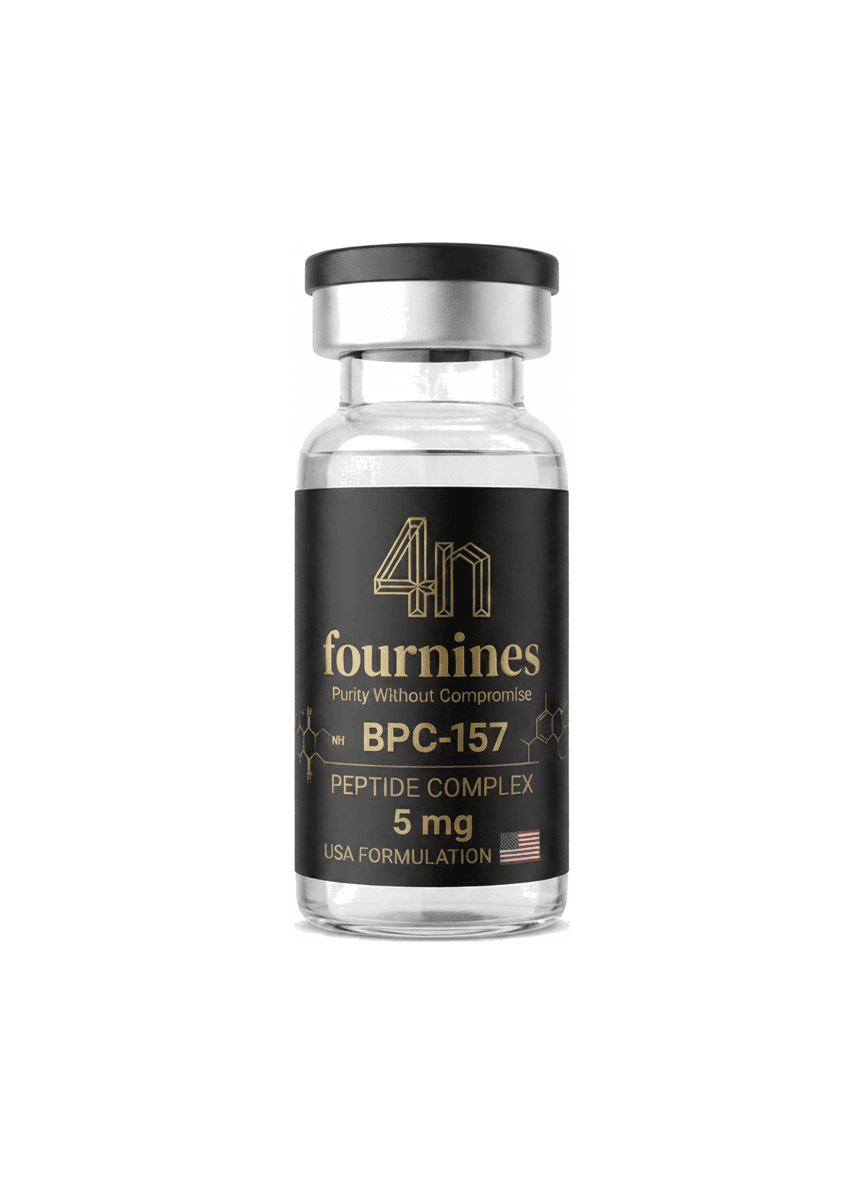
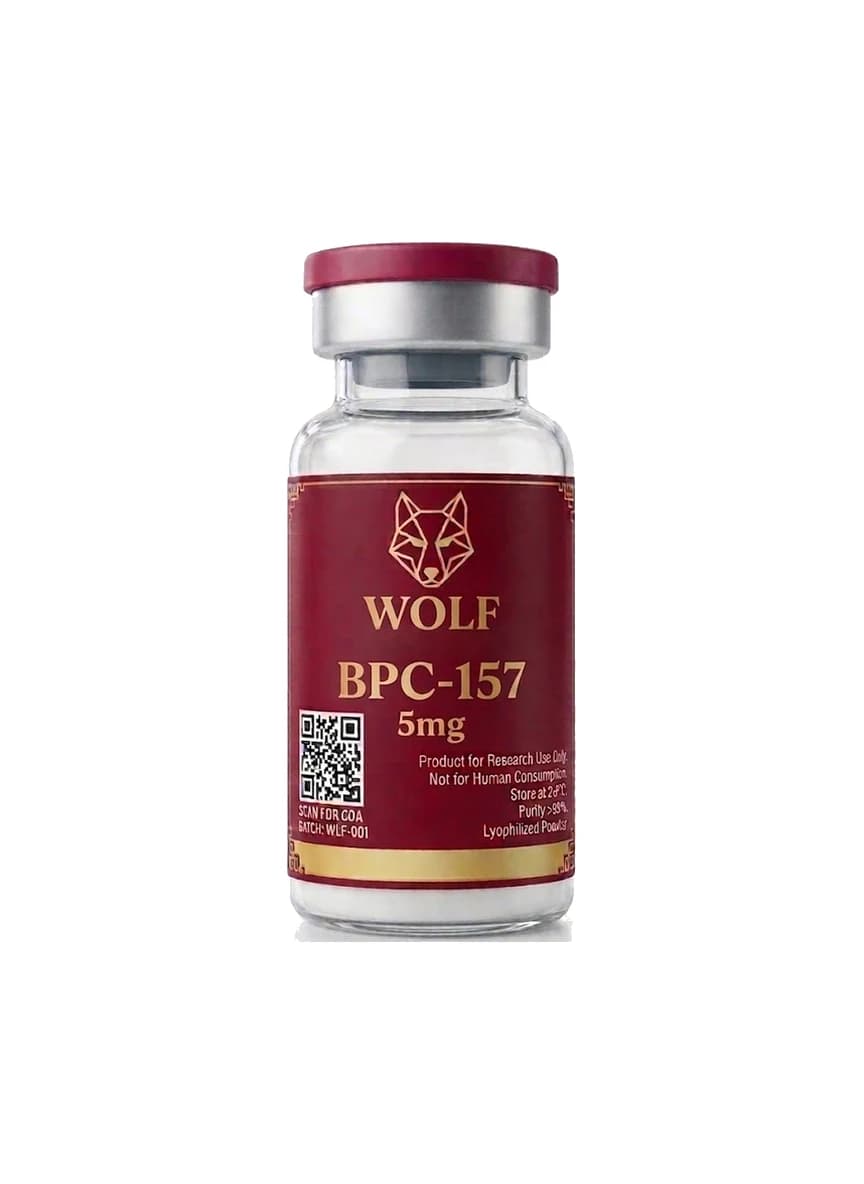
- bpc 157 5mg — mécanismes complémentaires couvrant la cascade complète de réparation des tissus mous ; le BPC gère l'angiogenèse, le TB-500 gère le remodelage de l'actine et le recrutement cellulaire.
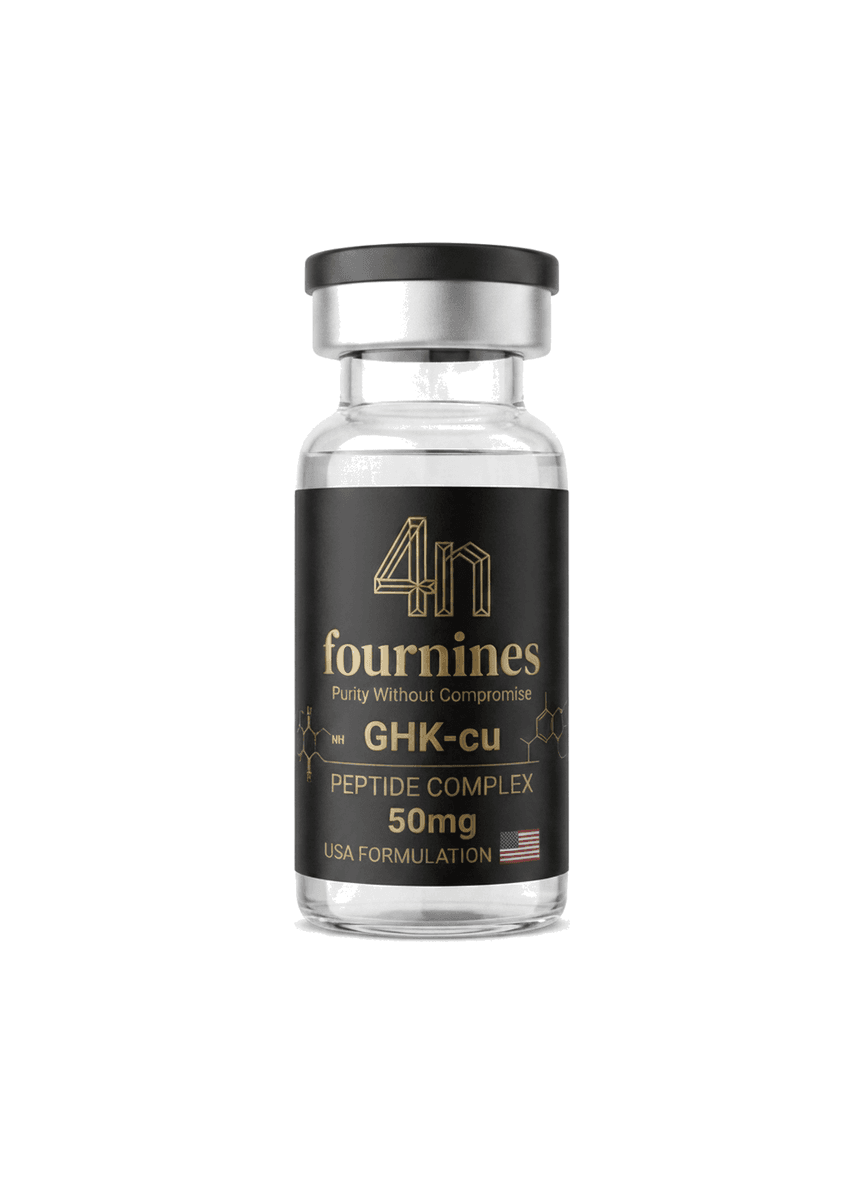
- ghk cu 50mg — ajoute la couche de collagène et d'élastine au stack de réparation, traitant la qualité de la matrice extracellulaire aux côtés de la migration cellulaire.
- beauty stack bpc tb500 ghk — combinaison pré-conditionnée de BPC-157, TB-500 et GHK-Cu pour une couverture complète des tissus conjonctifs et de récupération.
Points de vigilance
- Un début lent est attendu — la demi-vie de ~2 jours signifie que les effets tissulaires significatifs s'accumulent autour de la semaine 2, pas le jour 3. N'anticipez pas trop tôt les attentes ni n'abandonnez le protocole prématurément.
- L'action anti-inflammatoire systémique peut émousser l'adaptation inflammatoire aiguë. Chevaucher une phase complète de charge de TB-500 avec un bloc d'entraînement à haut volume risque d'atténuer la signalisation hypertrophique qui dépend d'une inflammation contrôlée. Utiliser pendant les phases de décharge ou de rééducation.
- Ne fournit pas un soulagement rapide de la douleur le jour 1. C'est un moteur de réparation, pas un analgésique — gérez la douleur aiguë séparément.
À propos de TB-500
Qu'est-ce que le TB-500 ?
Le TB-500 est un fragment synthétique de la Thymosine Bêta-4, une protéine ubiquitaire de 43 acides aminés impliquée dans la régulation du cytosquelette d'actine. Son action principale est la séquestration de la G-actine — la liaison de l'actine monomérique pour faciliter la migration cellulaire rapide vers les sites de lésion.
Quelle est la demi-vie du TB-500 ?
La demi-vie plasmatique du TB-500 est rapportée à ~2 jours (estim.). Il s'agit d'une valeur de référence de recherche issue d'études pharmacocinétiques publiées — le moment d'administration et les intervalles posologiques des protocoles publiés sont calibrés autour de cette valeur.
Quelle est la plage de doses de recherche typique pour le TB-500 ?
Les plages de protocoles de recherche publiées pour le TB-500 se situent entre 2–5 mg/semaine répartis sur 2–3 doses, administrés en sous-cutané / IM. Ces chiffres font uniquement référence au dosage de la littérature de recherche — il ne s'agit pas d'une recommandation clinique et le TB-500 est fourni ici strictement à titre de réactif de recherche.
À quelle classe de composés appartient le TB-500 ?
Le TB-500 appartient à la classe des peptides de cicatrisation parmi les peptides de recherche. Il est également désigné dans la littérature comme fragment TB4 ou fragment Thymosine β4. Chaque composé de la classe des peptides de cicatrisation partage une pharmacologie qui se recoupe, mais diffère par sa sélectivité de récepteurs, sa demi-vie et ses applications de recherche rapportées.
Quel est le cycle de protocole de recherche typique pour le TB-500 ?
Débutant (phase de charge) : 5 mg/semaine répartis en trois injections (lun/mer/ven à environ 1,67 mg chacune) pendant 4 semaines. Cela sature la cascade de réparation pendant la fenêtre aiguë de la lésion.
Note du catalogue
TB-500 n'est pas disponible actuellement
TB-500 est un composé de recherche que nous référençons dans notre base de connaissances mais que nous ne proposons pas actuellement en tant que SKU. Pour toute demande d'approvisionnement ou commande institutionnelle en gros, veuillez contacter notre équipe. En attendant, consultez l'ensemble du catalogue de peptides vérifiés par HPLC à ≥99 % que nous tenons en stock.
Même objectif de recherche
Composés de recherche apparentés


Les entrées du glossaire décrivent la pharmacologie de recherche dans un cadre strictement in vitro et de laboratoire.