Glossary · telomerase-activating peptide
Epithalon
Also known as: Epitalon · Epithalamin
- Class
- telomerase-activating peptide
- Half-life
- ~30 minutes (effects accumulate)
- Typical dose
- 5–10 mg/day during cycle
- Route
- subq
Mechanism
Epithalon is a synthetic tetrapeptide (Ala-Glu-Asp-Gly) modeled on epithalamin, a naturally occurring polypeptide isolated from the pineal gland of calves by Vladimir Khavinson's group at the Saint Petersburg Institute of Bioregulation and Gerontology. The primary reported mechanisms are upregulation of telomerase activity — the enzyme that extends telomeric DNA — and normalization of the melatonin-production axis through effects on pineal gland function.
The telomerase findings come largely from Khavinson's own body of work, involving both cell culture studies and longer-term animal models showing extended lifespan in certain rodent models. The circadian and melatonin-axis effects are the most consistently reported subjective experience in humans: users reliably report improved sleep quality, particularly deeper sleep architecture, within the first several days of a cycle. Whether this is a direct melatonin-axis effect or a downstream product of telomere regulation remains mechanistically open.
The peptide's half-life is very short (minutes in circulation), but effects appear to accumulate over the dosing window — the sleep improvements persist through the cycle and, anecdotally, for weeks afterward. This is consistent with an epigenetic or transcriptional mechanism rather than a direct ligand effect.
Typical protocol
- Starter: 10 mg SC daily for 10 days, then stop. Run 2–3 times per year — this is the classic Khavinson pulsed protocol.
- Advanced: 5 mg SC daily for 20 days, same annual cadence. Some prefer the lower dose extended for a softer but longer circadian reset.
- Cycle length: Pulsed protocol only. Do NOT run continuously — there is no literature support for continuous use, and receptor desensitization is a plausible concern. 10-day or 20-day pulses, 2–3× per year.
- Reconstitution: 10 mg vial + 1 mL BAC water → 10 mg/mL. On a U-100 insulin syringe: 10 IU = 0.1 mL = 1 mg. For 10 mg/day: 100 IU = full syringe. For 5 mg/day: 50 IU.
Who it's for
Longevity-focused users and those with poor sleep architecture, particularly those who notice circadian rhythm disruption or degraded sleep quality with age. Excellent fit for older lifters wanting a periodic circadian reset. Not a body-composition peptide and should not be marketed as one — it has no direct effect on muscle or fat metabolism. Often run alongside GHK-Cu in longevity stacks covering both dermal and pineal axes.
Stacks well with
- ghk cu 50mg — a classic longevity pairing covering two complementary axes: pineal/circadian (epithalon) and connective tissue/copper-dependent enzyme systems (GHK-Cu). No mechanism conflict.
- sermorelin 2mg — the sleep quality improvements from epithalon's circadian normalization compound with sermorelin's pre-bed GH pulse enhancement. Both improve nocturnal GH and sleep depth through different mechanisms.
Watch-outs
- Vivid dreams and a significant intensification of sleep depth are common in days 2–4 of the first cycle. This is the expected effect, not a problem — but users who aren't warned about it will be startled by it. Inform ahead of time.
- Pulsed protocol is the only validated approach. There is no data supporting continuous dosing, and the theoretical downside (receptor/pathway desensitization with continuous stimulation) gives reason to stay with the pulsed model.
- Reconstitution concentration is high (10 mg/mL) — dose math is straightforward but double-check before drawing. 10 IU = 1 mg, 100 IU = 10 mg.
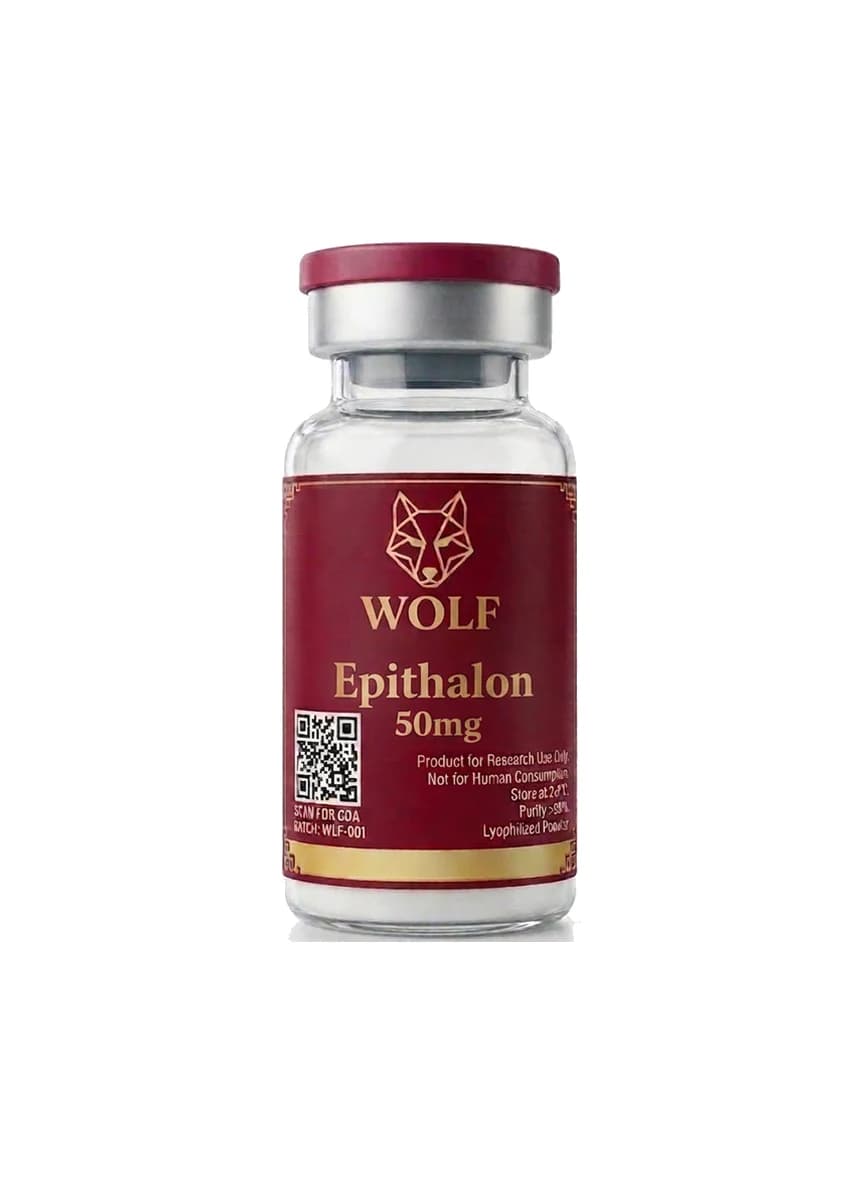
Epithalon research products
All products →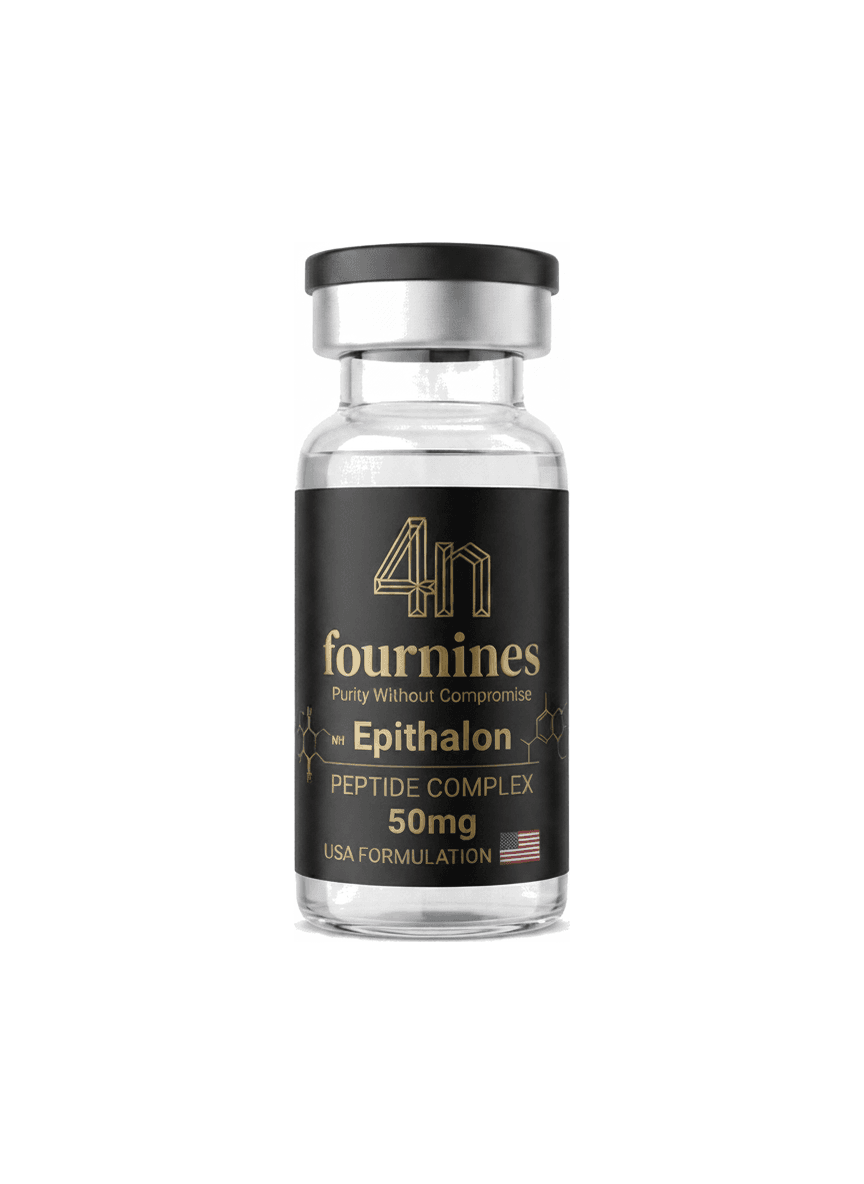
Glossary entries describe research pharmacology for in-vitro and laboratory contexts only. Not for human consumption.