Retatrutide vs Semaglutide: tripelagonist vs GLP-1-referencen
Semaglutide er den mest citerede GLP-1-monoagonist i moderne metabolisk forskning — forbindelsen, der etablerede den moderne vægttabs-evidensbase med STEP-programmet og kardiovaskulær evidens med SELECT. Retatrutide sidder fire receptorarkitektur-trin oppe ad stigen: den aktiverer GLP-1-, GIP- og glukagonreceptorer samtidigt og frembringer de største vægttabs-effektstørrelser, der hidtil er set i fedmeforsøg.
For et forskningshold, der vælger mellem dem, er spørgsmålet, om protokollen kræver den kanoniske mono-vejs-referenceforbindelse (Semaglutide) eller frontens multi-vejs-værktøj (Retatrutide). Begge leveres som lyofiliseret pulver med ≥99% HPLC-renhed, men deres farmakologi, doseringsskemaer og forskningsbrugstilfælde er markant forskellige.
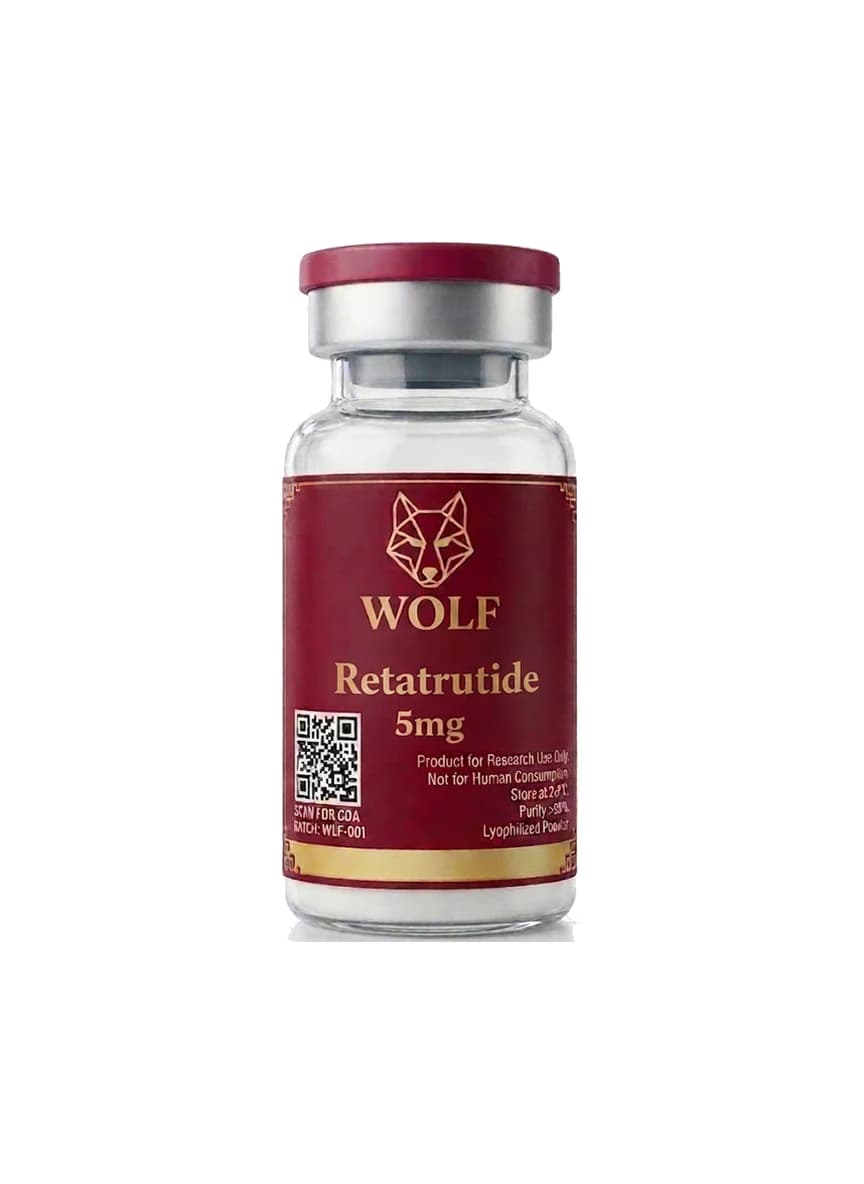
Retatrutide
Full entry →- Class
- GLP-1 / GIP / glucagon triple agonist
- Half-life
- ~6 days
- Dose
- 1 → 12 mg/week titrated
- Route
- subq
Semaglutide
Full entry →- Class
- GLP-1 receptor agonist
- Half-life
- ~7 days
- Dose
- 0.25 → 2.4 mg/week (titrated over 16+ weeks)
- Route
- subq
Key differences at a glance
| Property | Retatrutide | Semaglutide |
|---|---|---|
| Receptormål | GLP-1 + GIP + glukagon (tripel) | Kun GLP-1 (mono) |
| Klasse | Tri-inkretinagonist | GLP-1-agonist |
| Halveringstid | ~6 dage | ~7 dage |
| Administration | Subkutant, én gang om ugen | Subkutant, én gang om ugen |
| Typisk forskningsdosis | 2 → 12 mg/uge (titreret) | 0,25 → 2,4 mg/uge (titreret) |
| Vægttabets størrelse (Phase 2 / STEP) | ~24% kropsvægt ved 48 uger (12 mg) | ~15% kropsvægt ved 68 uger (2,4 mg) |
| Publiceret forsøgsbredde | Phase 2 publiceret; Phase 3 pågår | STEP 1–8, SUSTAIN, SELECT — fuldt modnet |
| Kardiovaskulær evidens | Pågår | SELECT-forsøget viste MACE-reduktion (2023) |
Arkitektonisk gab: mono vs tripel
Semaglutide aktiverer en enkelt receptor — GLP-1. Den nedstrøms kaskade (insulinsekretion, glukagonhæmning, forsinket ventrikeltømning, hypothalamisk appetitsignalering) er velkarakteriseret gennem næsten to årtiers litteratur. Mono-vejen gør Semaglutide til det reneste forskningsværktøj til spørgsmål, der isolerer GLP-1-mekanisme — konfundere fra andre inkretinveje er fraværende.
Retatrutide aktiverer tre receptorer samtidigt: GLP-1 (den kanoniske inkretinvej), GIP (adipocyt- og lipidhåndteringseffekter) og glukagon (energiforbrug). Kombinationen frembringer effektstørrelser, der overgår enhver monoagonist med en bred margin, men multi-vejsarkitekturen betyder, at forskere ikke kan bruge Retatrutide til at isolere nogen enkelt mekanisme. De to forbindelser besvarer forskellige forskningsspørgsmål.
Forsøgsdata og dosis-størrelses-sammenligning
STEP 1-forsøget (Wilding et al., 2021, NEJM) etablerede Semaglutides ~15% kropsvægtreduktion ved 68 uger for 2,4 mg/uge-dosis hos ikke-diabetiske overvægtige/fede voksne. SELECT (Lincoff et al., 2023, NEJM) tilføjede det kardiovaskulære endpoint — signifikant MACE-reduktion uafhængigt af vægttab — der omformede GLP-1 som kardio-protektiv.
Retatrutides Phase 2-forsøg (Jastreboff et al., 2023, NEJM) ved 12 mg/uge frembragte ~24% kropsvægtreduktion ved 48 uger. Direkte head-to-head-data er endnu ikke publiceret, men Phase 2-tallene antyder stærkt en større effektstørrelse end Semaglutide ved matchede protokoltidspunkter. De Phase 3-forsøg, der i øjeblikket er undervejs, vil frembringe den definitive sammenligning.
When to pick each
Pick Retatrutide when
- Effektens størrelse er det primære endpoint — Retatrutide Phase 2 viser de største vægttabstal i klassen.
- Forskningsspørgsmålet berører glukagonreceptorens energiforbrug eller multi-receptor-signalering.
- Du ønsker frontens tripelagonist-data ved siden af eller over for etablerede dual / mono-baselines.
Pick Semaglutide when
- Du har brug for den længste og mest replikerede forsøgsrekord (STEP 1–8, SUSTAIN, SELECT).
- Forskningsspørgsmålet kræver mono-GLP-1-mekanismeisolering uden GIP / glukagon-konfundere.
- Kardiovaskulær-udfaldsforskning, hvor SELECT-forsøgets evidens er den kanoniske reference.
Frequently asked
Hvorfor er Retatrutide så meget mere potent på vægttab?
To samvirkende grunde: (1) den aktiverer tre receptorer i stedet for én og frembringer additive metaboliske effekter; (2) glukagonkomponenten tilføjer direkte energiforbrugsstimulation, som Semaglutide ikke leverer. Phase 2-effektstørrelsen er omtrent 1,5–2x Semaglutide ved matchede tidspunkter, men direkte head-to-head-forsøg er stadig undervejs.
Er Retatrutide FDA-godkendt?
Nej — Retatrutide er i Phase 3-forsøg. Semaglutide (som Ozempic / Wegovy) er FDA-godkendt til diabetes og vægthåndtering. LifeSpanSupply fører Retatrutide strengt som forskningsreagens til laboratoriebrug, ikke til human administration uden for en forskningssammenhæng.
Kan jeg erstatte den ene med den anden?
I forskningskontekster, nej. Forbindelserne besvarer forskellige spørgsmål: Semaglutide til mono-GLP-1-mekanismearbejde og den kanoniske referencebase; Retatrutide til frontens multi-inkretinarbejde og størrelses-maksimerende protokoller. Doseringsskemaerne er også meget forskellige — Semaglutide titreres til 2,4 mg/uge, Retatrutide titreres til 12 mg/uge — ikke ombyttelige.
Hvilken har flere bivirkninger?
Begge deler GLP-1-klassens GI-bivirkningsprofil (kvalme, obstipation, GERD), især under dosisoptrapning. Phase 2 Retatrutide viste sammenlignelige GI-hændelsesrater med historiske GLP-1-forsøg på matchede protokolstadier. Begge drager fordel af langsom titrering. Glukagonreceptorvejen i Retatrutide tilføjer et lille hepatisk-glukosesignal, som forskere overvåger i forsøgsprotokoller.
Shop Retatrutide
All products →

Comparison guides summarize research-context differences. All compounds are chemical reagents for laboratory analysis. See our Terms & Conditions.